





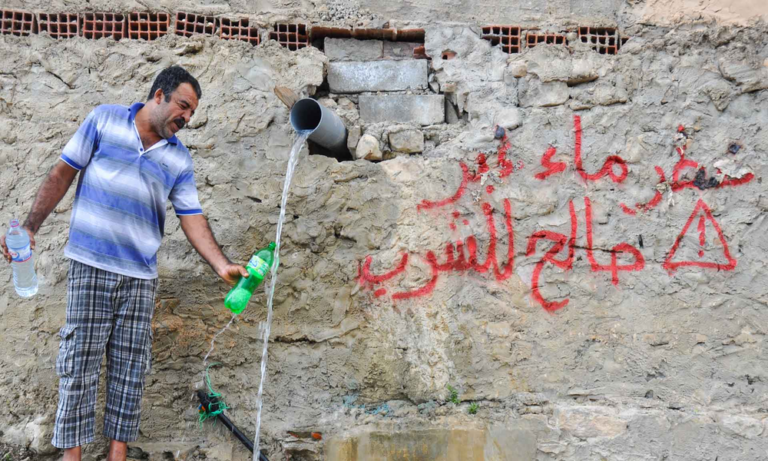
Tunisia presents a distinct economic paradox: despite achieving near-universal access to essential basic infrastructure, the nation continues to grapple with persistent structural and territorial economic challenges.
Data from the National Institute of Statistics (INS) confirms that Tunisia is one of the best-equipped countries in North Africa in terms of domestic utility coverage. By 2023, access to the drinking water network had expanded to 91.7% of households, serving roughly 11.7 million people compared to 7.5 million in 1994. Similarly, the electricity sector has reached near-total saturation, with connection rates climbing from 86.8% in 1994 to 99.9% in 2023. These achievements are the result of decades of sustained public investment, particularly through rural electrification and water expansion programs.
However, these utility milestones are offset by significant gaps in other critical infrastructure areas, most notably sanitation. While the percentage of households connected to the public sanitation network grew from 39.1% in 1994 to 65.4% by 2023, approximately 2.146 million households remain unconnected. This disparity between water accessibility and sanitation coverage poses a major hurdle for public policy, as incomplete sanitation networks contribute to environmental pollution and limit the quality of life in rural and peri-urban regions.
Beyond the technical statistics, this infrastructure foundation has not been sufficient to insulate the country from wider economic difficulties. Tunisia’s macroeconomic environment remains constrained by high public debt, inflationary pressures, and sluggish growth, with unemployment rates—particularly among youth and college graduates—remaining a persistent source of social concern. While the government continues to prioritize major projects, such as the planned $1 billion expansion of Carthage Airport and extensive road network upgrades scheduled for 2026, experts note that physical infrastructure alone is not a panacea. Sustained recovery will require moving beyond just building capacity to also addressing structural bottlenecks, improving logistics, and reforming the institutional climate to better attract investment and stimulate job creation.
MK/Sf/fss/abj/APA