





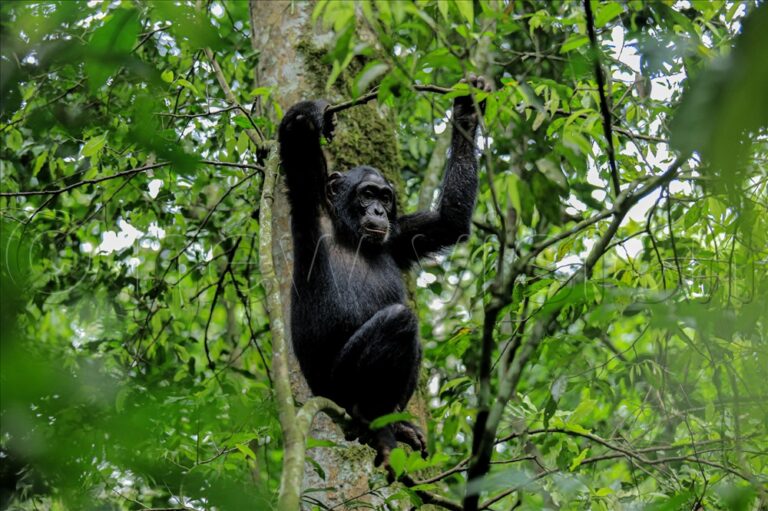
Chimpanzees in Uganda’s Kibale National Park have waged a lethal ‘civil war’.
Much like in a civil war, the group fractured into two, a new study revealed.
The study published by in the science journal said the world’s largest-known group of chimpanzees in Uganda split into two factions that are now engaged in deadly struggle against each other.
The study said since the past few years, one faction has begun killing their former group mates on the other side.
“It’s an exceedingly rare event: scientists estimate that chimpanzee communities split, on average, every 500 years,” the researchers said.
It is not clear exactly why the once close-knit communities of Ngogo chimpanzees at Uganda’s Kibale National Park are at loggerheads, but since 2018 scientists have recorded 24 killings, including 17 infants.
“These were chimps that would hold hands,” lead author Aaron Sandel said. “Now they’re trying to kill each other.”
The study published by the journal Science, said the intensity and duration of the violence may inform how early human conflict developed.
The study relied on three decades of data dating to 1995 from Kibale National Park in Uganda, home to the Ngogo chimpanzees—a community of about 200 individuals. Social relationships here clump around two primary groups, named the Central and Western clusters.
For decades, they formed a single community in which chimpanzees shared territory, changed which cluster they most often affiliated with and mated with individuals from the other cluster—until 2015, says the study’s lead author Aaron Sandel, a primatologist at the University of Texas in Austin.
On June 24 of that year, Sandel was observing Ngogo chimpanzees when a Western party approached a Central one. Normally, the two would mingle and then split. But this time, the Western chimps quieted when they heard their Central group mates. Then they ran away, and the Central bunch chased after them.
The clusters began to separate geographically and socially. By 2017, the two groups occupied entirely distinct territories and patrolled their borders against outsiders. The following year, deadly violence ensued.
Between 2018 and 2024, the researchers witnessed Western adults kill seven males and 17 infants from the Central group, the paper reports. An additional 14 adolescent or adult Central males disappeared during that time, and their bodies were never recovered—these males hadn’t shown signs of illness, so at least some of them also may have been victims of Western chimpanzee aggression.
MG/as/APA