



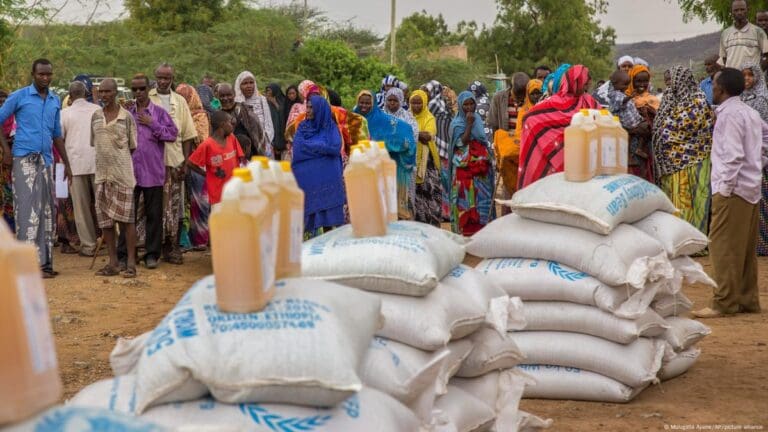
The UN Office for the Coordination of Humanitarian Affairs (OCHA) said it has faced a funding gap of $496 million in its operation in Ethiopia for the first half of the year.
In its latest Priority Humanitarian Response and Critical Funding Gaps report, OCHA said humanitarian needs remain high due to ongoing conflicts, climate shocks, and health emergencies in the east African country.
The organisation stated that the humanitarian situation remains “critical,” particularly in conflict-affected areas such as Amhara and western Oromia, where insecurity has disrupted access to services. OCHA also reported that protection concerns persist, including “gender-based violence, child separation, forced evictions, and destruction of property.” The presence of unexploded ordnance in some areas has also been noted.
Seismic activity in Afar and Oromia has added to the crisis, with “232 earthquakes recorded since December 2024,” OCHA said. While the likelihood of “intensified earthquakes or a volcanic eruption remains uncertain,” the report emphasised that such risks compound the challenges facing vulnerable populations.
The government’s efforts to relocate those people affected by earthquakes to the ‘New Vision’ site in Awash Arba have been met with resistance.
Food insecurity, OCHA stated, remains a key issue. The report noted that “malnutrition, particularly among children and women, has reached concerning levels in different parts of the country.”
OCHA has estimated a provisional financial requirement of $2 billion for Ethiopia’s humanitarian response in 2025.
Despite funding challenges, OCHA said humanitarian operations continue using resources carried over from 2024 and new funding contributions for 2025.
However, it warned that “financial constraints have already led to the suspension of some life-saving assistance” and that while “some elements of the response, including emergency food assistance and water provision, are expected to continue, gaps remain in other critical areas.”
MG/as/APA