





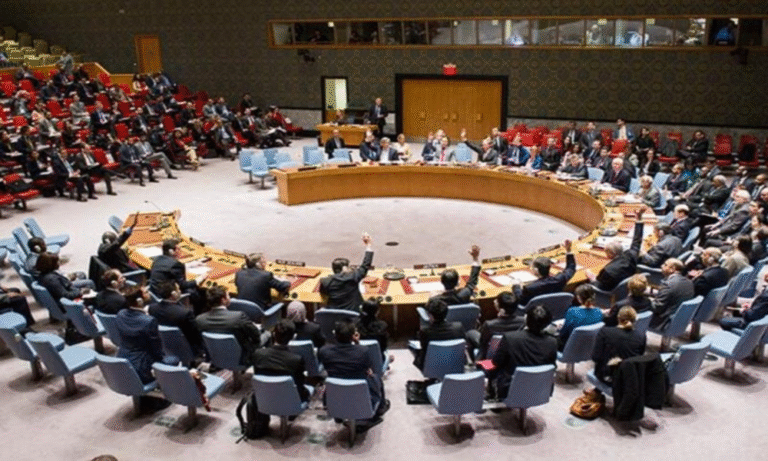
The United Nations Security Council on Friday evening in New York adopted a resolution extending the mandate of the UN Mission for the Referendum in Western Sahara (MINURSO) for one year, reaffirming the Moroccan autonomy plan as the reference framework for reaching a lasting political settlement to the regional dispute.
Eleven of the Council’s fifteen members backed Morocco’s position on Resolution 2797 concerning the Moroccan Sahara—well above the nine votes required for adoption. None of the permanent members exercised a veto, reflecting a growing consensus around the Moroccan approach, which has been described by many powers as “serious and credible.”
Sponsored by the United States, the resolution underscores the need for a “political, realistic, pragmatic and lasting” solution based on compromise. It calls on the parties to resume round-table discussions under the auspices of the UN Secretary-General’s Personal Envoy, Staffan de Mistura, with the participation of Morocco, Algeria, Mauritania and the Polisario Front.
For Morocco, the vote represents another milestone in international recognition of its 2007 autonomy initiative, considered the only credible basis for resolving a conflict that has persisted for nearly half a century. Several member states—including France, the United Kingdom, Japan and the United Arab Emirates—commended Morocco’s “constructive role” in seeking a peaceful and lasting settlement.
The renewal of the mission’s mandate comes amid growing international support for the Moroccan autonomy plan, with more than thirty countries having opened consulates in the southern provinces. It further strengthens the kingdom’s diplomatic standing at a time when the United Nations seeks to revive a political process that has been stalled for several years.
Resolution 2797 was adopted with eleven votes in favour, none against and three abstentions, while Algeria declined to participate in the vote.
Following this diplomatic success, scenes of spontaneous celebration erupted across Moroccan cities, particularly in Laayoune, Dakhla, Smara and Boujdour, where thousands took to the streets to celebrate the triumph of Moroccan diplomacy.
Waving national flags and portraits of the king, residents of the southern provinces expressed their unwavering commitment to national unity and the Moroccan identity of the Western Sahara, in a festive atmosphere filled with pride and patriotism.
MK/ak/sf/lb/as/APA