





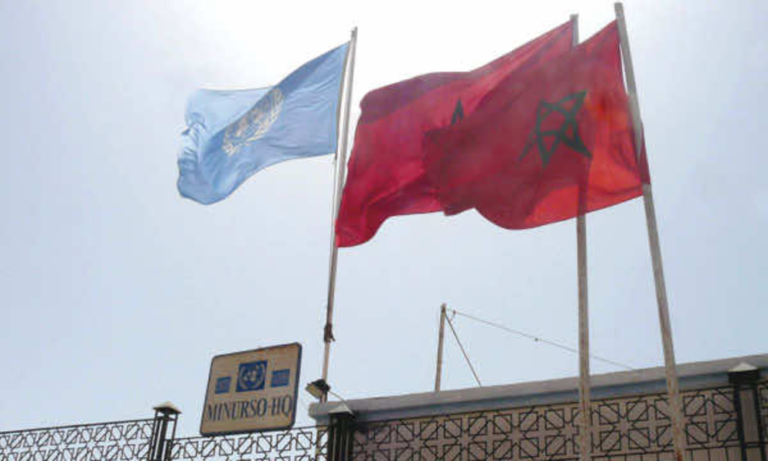
The Trump administration is re-evaluating its commitment to peacekeeping operations, including MINURSO, ahead of a diplomatic deadline at the Security Council.
Washington launched a strategic review of its participation in United Nations peacekeeping operations, including the United Nations Mission for the Referendum in the Western Sahara (MINURSO), according to official statements in New York.
This initiative comes just weeks before the UN Security Council’s April session dedicated to
this issue, as part of a broader redefinition of Washington’s diplomatic priorities.
“We are conducting a strategic review of the peacekeeping force that has been present in Western Sahara for 50 years,” said US ambassador to the UN Mike Waltz. According to him, this approach aims to avoid the indefinite extension of missions deemed ineffective.
The diplomat emphasised the need to reorient international arrangements toward more effective formats aligned with US strategic interests.
This approach is part of a broader policy to streamline UN operations. Secretary of State Marco Rubio mentioned in February the intention to end missions deemed “costly and ineffective.”
Washington cites several recent precedents, including the closure of the assistance mission in Iraq, generating estimated annual savings of $87 million (approximately €80 million), as well as the anticipated $25 million (nearly €23 million) reduction related to the special political mission in Yemen.
US officials emphasise that this strategy also aims to promote more targeted conflict resolution formats, favoring structured political processes.
Washington intends to be directly involved in settlement dynamics, while opposing initiatives deemed contrary to its interests or those of its allies in multilateral forums.
This reassessment comes as several analyses question the effectiveness of MINURSO in relation to its initial mandate. Observers believe the mission failed to bring about a lasting breakthrough, maintaining a prolonged stalemate.
However, some experts note a shift in the parameters of the issue, with growing international support for the autonomy plan proposed by Morocco as a basis for a settlement.
In this context, the United States reaffirms its commitment to a mutually acceptable, negotiated political solution. Its approach aims to encourage the parties to engage in pragmatic discussions that can lead to a lasting outcome, while also redefining the role of existing international mechanisms.
MK/AK/te/fss/as/APA