



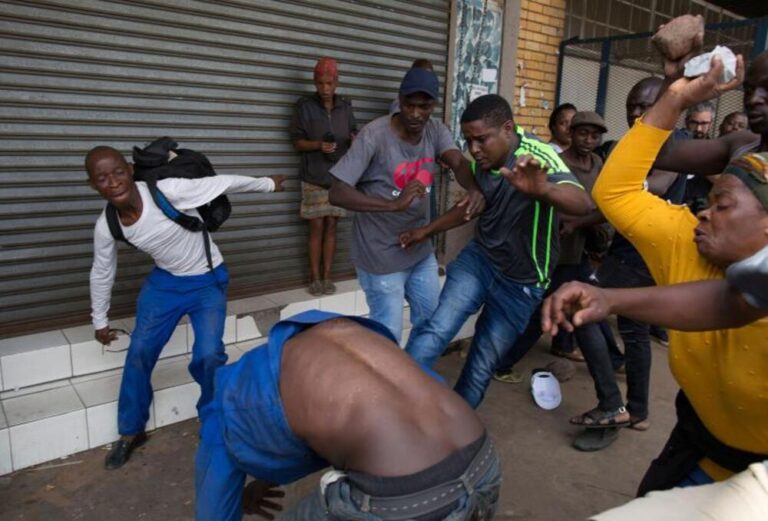
South Africa could be edging towards a repeat of the July 2021 riots as analysts warn that the situation could turn violent and that the Pretoria authorities will struggle to stop the current anti‑migrant rhetoric after a 30 June deadline for foreign nationals to leave the country.
Political analyst Donald Porusingazi says “the question of whether South Africa is heading towards another wave of violent unrest is no longer academic.”
“In recent months, South Africa has witnessed a resurgence of anti‑migrant sentiment that echoes the volatile atmosphere preceding the July 2021 riots when protests triggered by the incarceration of former president Jacob Zuma spiralled into the deadliest unrest of the democratic era,” Porusingazi says.
More than 350 people died in the 2021 chaos that exposed deep fractures in the country’s social fabric and the state’s limited capacity to contain coordinated violence.
The sense of déjà vu is unmistakable, the analyst says.
“Today, the triggers are different, but the atmosphere feels unsettlingly familiar,” he says.
Across the country, groups of locals mobilising around anti‑migrant sentiment have grown louder and more confrontational, framing foreign nationals as the cause of unemployment, crime and pressure on public services.
Their rhetoric has hardened into a worldview that divides communities into “us” and “them,” reducing entire nationalities to stereotypes and fuelling resentment that has already spilled into violence in several areas.
Migrant‑owned shops have been attacked, children have been harassed on their way to school and some clinics have been blockaded by activists demanding that foreign nationals be denied access to healthcare.
The South African government has responded with a flurry of measures aimed at demonstrating control.
The Department of Home Affairs has intensified raids on businesses employing undocumented workers, expanded biometric systems to detect overstayers and accelerated deportations.
These actions, while intended to reassure the public, also reflect a delayed response to tensions that have been building for years.
Critics argue that the state’s slow reaction allowed anti‑migrant narratives to take root, creating fertile ground for opportunistic actors who exploit public frustration for political gain.
Porusingazi says a key question now hangs over the country: what will happen after the 30 June deadline for undocumented African nationals expires?
“We foresee the distinct possibility that groups driving the anti‑migrant campaign will escalate their activities rather than stand down, especially as their messaging becomes more militant and their actions more coordinated.”
In 2021, what began as political protest quickly morphed into something far more destructive, fuelled by misinformation, factionalism and economic desperation.
JN/APA