





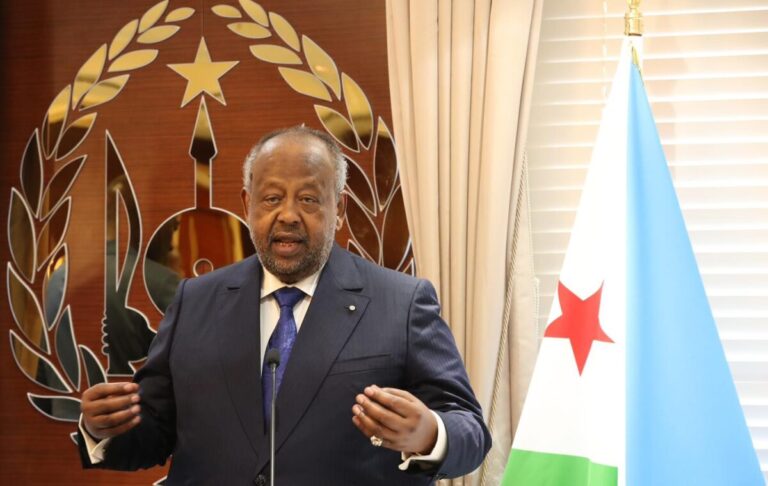
Djibouti’s presidential election concluded on Friday after more than 200,000 cast ballots during the day-long election.
Voting began at dawn across the Red Sea nation, with voters steadily turning out in what officials described as a highly organised electoral process.
The incumbent President Ismaïl Omar Guelleh and his main challenger Mohamed Farah Samatar also cast their ballots in the early hours of the day in the capital.
Guelleh, 78, has ruled the country of about 1 million for more than two decades. The results of the 2021 election showed him winning nearly 99% of the vote.
He faces a single challenger, Mohamed Farah Samatar, a former ruling party member, in a race analysts say offers little genuine competition.
Opposition groups frequently boycott elections, citing restrictions on political freedoms. Critics describe the system as tightly controlled, while authorities point to stability in a volatile region.
Guelleh succeeded his uncle, former President Hassan Gouled Aptidon, in 1999, extending a family-led system that has shaped the country’s politics for decades.
Djibouti hosts multiple foreign military bases, including those of the U.S., China, France and Japan, underscoring its strategic importance along a key global shipping route linking the Red Sea and the Gulf of Aden. Revenues from these arrangements, along with port services for neighboring Ethiopia, underpin the economy.
A total of 67 international observers have been deployed to monitor the vote, representing major regional and international bodies including the African Union, the Intergovernmental Authority on Development (IGAD), the League of Arab States, and the Organization of Islamic Cooperation.
MG/as/APA