



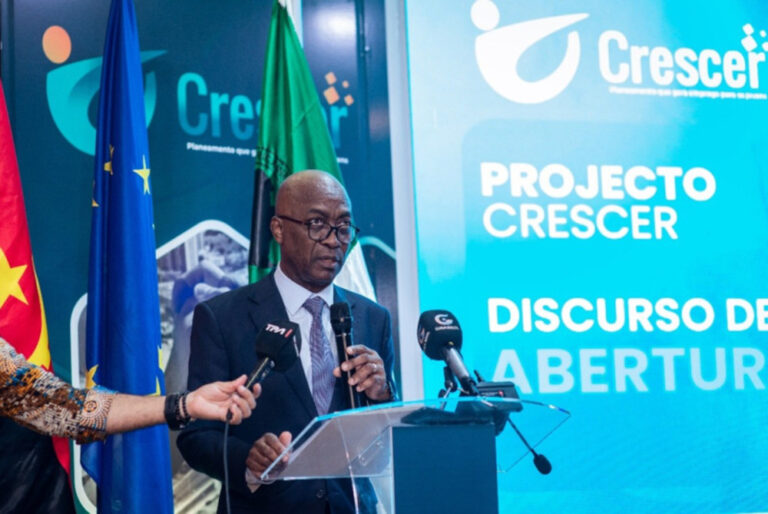
The African Development Bank (AfDB), in partnership with the government of Angola and the European Union, has launched a $125 million youth employment initiative aimed at creating nearly 150,000 jobs and accelerating entrepreneurship among young Angolans.
The Crescer Project, unveiled in Luanda on Tuesday, is expected to generate over 37,000 direct jobs and 112,000 indirect opportunities, while supporting the growth of more than 10,000 micro, small and medium-sized enterprises (MSMEs) and startups.
It will also train nearly 98,000 youth in digital technologies, climate-smart agriculture and transport.
“We commend the Angolan government for taking such a decisive step toward investing in young people,” said Eugénio Maria Paulo, AfDB Executive Director for Angola, Mozambique, Namibia, and Zimbabwe.
“By placing youth at the centre of national development, the government sends a powerful message: that young people will build Angola’s future.”
The initiative aligns with Angola’s Vision 2050 and the National Development Plan 2023–2027 and contributes to the Sustainable Development Goals.
Planning Minister Victor Hugo Guilherme noted its strategic importance for inclusive growth and economic diversification.
The project is co-financed by AfDB ($79.08 million), the Angolan government ($29.06 million) and the European Union ($16.08 million).
It includes three core components: demand-driven skills development, business acceleration, and improved access to finance.
Up to $15 million will be injected to expand financial inclusion, with at least half of the beneficiaries expected to be women.
The Crescer Project complements Angola’s Science and Technology Park initiative, also supported by AfDB, which aims to foster innovation and provide scholarships in STEM fields. Completion of the park is scheduled for November 2025.
AfDB currently manages 16 active operations in Angola worth $1.45 billion, spanning energy, agriculture, finance, water and social sectors.
Since 1980, the bank has approved over $3.36 billion in loans and grants to support Angola’s development.
JN/APA