



Africa must now put adaptation at the centre of its climate strategy, according to economist Hafez Ghanem, author of a recent analysis by the Policy Center for the New South (PCNS).
The continent has limited leverage to influence a global trajectory pointing towards roughly 3°C of warming by the end of the century, amid slowing mitigation efforts in industrialised countries.
The report notes that 2024 was the hottest year ever recorded, with global temperatures averaging 1.55°C above pre-industrial levels, according to the World Meteorological Organization. Mr. Ghanem stresses that the current warming trend is largely driven by the historic stock of greenhouse gases already in the atmosphere, making a rapid reversal unlikely.
Even if countries meet their current climate commitments, available projections converge toward a temperature rise of around 3°C—far from the Paris Agreement targets. Africa, which accounts for just 7% of cumulative global emissions and 6% of recent emissions, with far lower per-capita levels than major emitters, therefore has little influence over the global outcome.
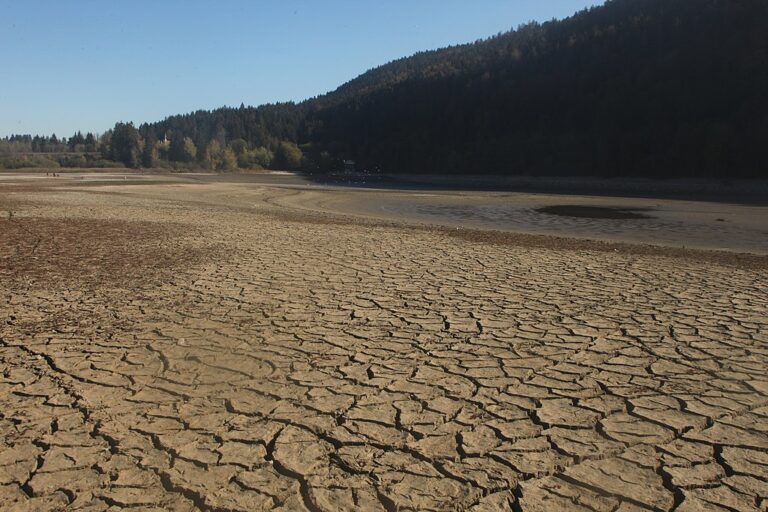
Yet the continent remains on the front line of the impacts of accelerated warming—particularly North Africa, Southern Africa and water-stressed regions. The study forecasts warming above 3°C in Southern Africa, more frequent heatwaves, declining rainfall in several regions, and heightened risks for coastal cities vulnerable to sea-level rise.
The economic implications could be severe, with estimated losses of 2% to 4% of Africa’s GDP by 2040 due to impacts on agriculture, fisheries, infrastructure and public health. Expected consequences include drops of up to 22% in agricultural yields in sub-Saharan Africa and a rise in water-borne and vector-borne diseases.
Given these trends, adaptation emerges as a strategic necessity. The report outlines several priorities: early-warning systems, sustainable water management, coastal protection, resilient infrastructure, land restoration, stronger health systems and improved social safety nets.
Financing needs exceed $100 billion per year, yet Africa receives only a fraction of this amount today, often in the form of loans. The author calls for increased domestic resources, greater private-sector mobilisation and innovative tools such as debt-for-climate swaps.
In conclusion, the report argues that adaptation must become the cornerstone of Africa’s climate action, warning that any delay risks causing irreversible damage to the continent.
MK/te/lb/as/APA