





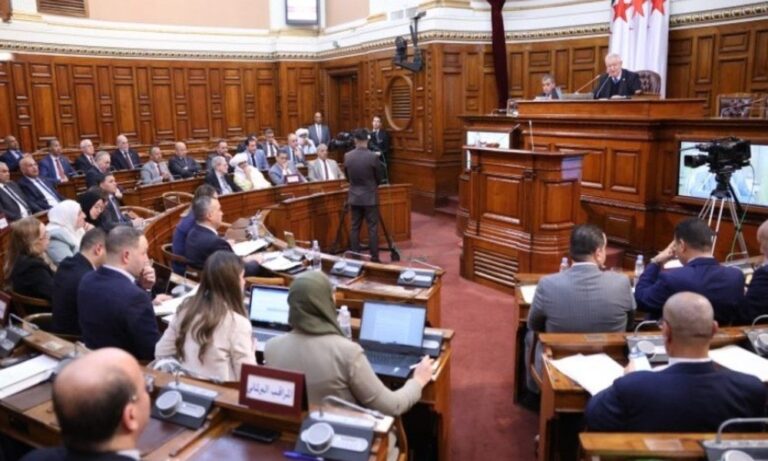
Faced with rising road death toll, the Algerian Parliament has passed a reform to curb the scourge that continues to claim thousands of lives every year.
The National People’s Assembly (APN) has adopted a revised Highway Code, presented by the government as a tool to strengthen road safety across Algeria.
The reform comes against the backdrop of the deeply troubling death toll on the country’s roads, with authorities citing the need for a tougher legal framework in response to what some officials have described as a “national tragedy”.
According to official figures, road accidents claimed 3,838 lives and left 37,020 people injured in 2025, representing a 1.95% rise in fatalities and 2.68% increase in accidents compared to 2024.
In the past week alone, security services recorded 52 deaths and 1,659 injuries, a toll that lays bare the scale of the problem that is regularly condemned, but rarely brought under control.
The authorities attribute 96% of accidents to human error, including speeding, dangerous overtaking and failure to observe traffic regulations.
The legislative reform reflects President Abdelmadjid Tebboune’s stated determination to tighten the legal arsenal on road safety. At a cabinet meeting, the head of state had called for a comprehensive overhaul of the regulatory framework to put an end to what he described as a “tragedy that is killing our children.”
The bill was championed by Interior, Local Authorities and Transport
Minister Saïd Sayoud, who defended a legislative framework built on
stronger institutional mechanisms and stricter rules governing driving
behavior.
The passage of the text was not without friction, however. an initial version had been approved by the APN before being partially sent back by the Council of the Nation, which requested revisions to 11 articles.
The contested provisions were then reviewed by a joint committee in early 2026, following protests from transport operators alarmed by what they considered excessively harsh penalties. Certain wordings were amended and several terms related to the criminalization of traffic offences were removed.
Amid the pushback, the Interior Minister met with trade union representatives from the sector to explain the new provisions and reassure them about the spirit of the text, insisting the bill had been debated “in a fully democratic manner”.
The episode nonetheless highlights the persistent difficulties authorities face in pushing through structural reforms in a sector where deep-seated dysfunctions, an aging vehicle fleet, mechanical failures and inadequate
infrastructure are routinely flagged as contributing factors.
MK/AK/lb/gik/APA