



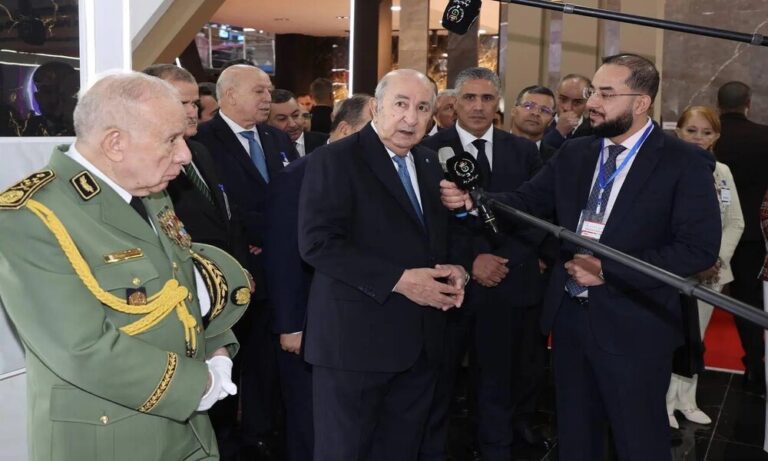
During a visit to the National Production Fair, Algerian President Abdelmadjid Tebboune renewed the government’s commitment to recovering “colossal sums” of public money embezzled and hidden in offshore tax havens.
Tebboune described a “dark period” of the Algerian economy characterized by predatory practices, over-invoicing, and the systematic misappropriation of state funds.
The President specifically identified jurisdictions like the Virgin Islands as locations where trillions of dinars have been hidden. While he promised that “the money hidden abroad will eventually come back,” the path to recovery remains challenging: Legal Complexity: Recovering assets in offshore jurisdictions is hampered by complex international judicial cooperation and the intricate nature of financial structures. Traceability Barriers: Stringent requirements for tracing funds significantly slow down restitution efforts, making the timeline for recovery uncertain. Measured Progress: Observers note that despite frequent official announcements, concrete results regarding the total amounts repatriated are difficult to verify.
A central pillar of the government’s strategy is the revitalization of domestic companies confiscated during anti-corruption investigations. The state-owned holding company Agrodiv has become the primary example of this interventionist approach: Operational Success: Out of 37 recovered production units, 35 are now operational. Job Preservation: Authorities report that more than 2,200 jobs have been maintained through state management.
While the industrial recovery is presented as a success, economists and observers raise concerns regarding the long-term effectiveness of these measures: Centralization Risks: Experts argue that the systemic corruption Tebboune denounces originally flourished due to insufficient controls and highly centralized decision-making. Lack of Structural Reform: Critics point out that the current strategy focuses on state takeovers of confiscated assets rather than implementing deep structural reforms to prevent future abuses. Transparency Concerns: The absence of independent assessments and increased transparency fuels ongoing debate over whether the current mechanisms are truly effective or are largely driven by political posturing.
President Tebboune continues to emphasize the continuity of government action and praised the Prime Minister’s role in the recovery process, asserting that the mechanisms now in place will eventually secure the return of the nation’s assets.
MK/AK/Sf/fss/abj/APA