





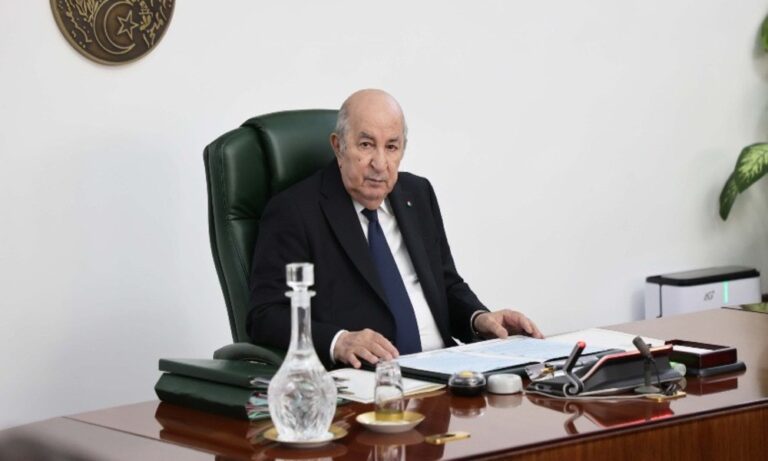
To mark the celebrations of the Amazigh New Year (Yennayer 2976), President Abdelmadjid Tebboune has reintroduced the theme of national reconciliation by offering a path to regularization for Algerian nationals living illegally abroad.
Presented as a humanitarian “outstretched hand,” the initiative specifically targets young Algerians in precarious administrative situations. According to the Council of Ministers, the state aims to provide a refuge for citizens it describes as “deceived” or “manipulated” by hostile external forces, under the condition that they formally pledge not to engage in further activities against the state’s interests.
The official narrative positions this move as a continuation of the “Rahma” (mercy) laws that helped end the country’s “Black Decade” of civil war. By framing the current migratory crisis through the lens of reconciliation, the government portrays the state as a protective paternal figure rescuing its children from poverty and degrading conditions in foreign lands. Authorities have highlighted the cases of former activists, such as those from the MAK movement, as examples of successful reintegration into the national fold, using these instances to contrast domestic stability with alleged external destabilization efforts.
However, many observers suggest this interpretation may be overly simplistic. While the government emphasizes external manipulation, the exodus of Algerian youth is largely driven by internal factors, including high unemployment, a lack of economic prospects, and a heavy dependence on the hydrocarbon sector. Although the President simultaneously touted major mining and industrial projects aimed at transforming Algeria into an emerging economy, the reality of daily life for many remains a struggle against persistent socio-economic stagnation.
Ultimately, the “olive branch” appears to serve a dual purpose. While it offers a pragmatic administrative solution for many individuals in distress, it also functions as a strategic move to reinforce the state’s moral authority and neutralize critics abroad. Without accompanying structural reforms or broader political openness, this gesture of clemency risks being viewed as a symbolic maneuver rather than a comprehensive solution to the deep-seated divisions and economic challenges facing Algerian society today.
MK/Sf/fss/abj/APA