





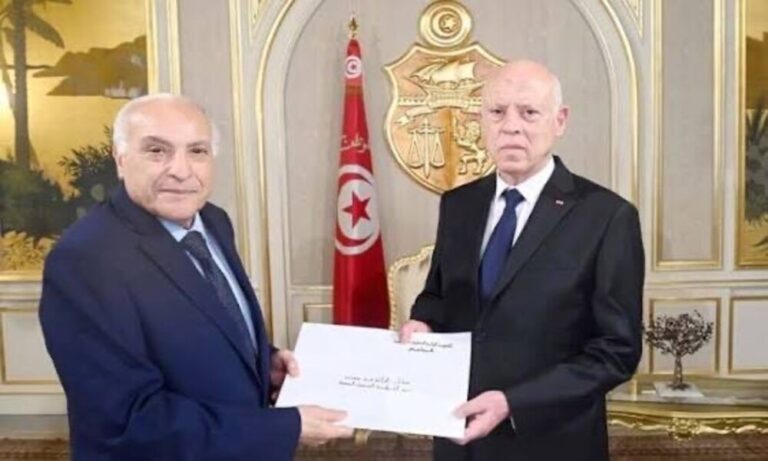
The visit of Algerian Foreign Minister Ahmed Attaf to Tunis on Monday, January 26, 2026, highlighted a familiar pattern of political convergence between the two nations that remains short on concrete action.
Received by President Kaïs Saïed, Attaf’s visit focused on the ministerial meeting of the tripartite mechanism for Libya’s neighbors, yet the encounter was dominated by recurring rhetoric of regional solidarity rather than new, tangible initiatives. While the Algerian statement expressed a desire for an “integrated vision” for bilateral cooperation, this consensus has historically struggled to manifest as structural progress in the critical areas of trade, security, and economics.
A central theme of the discussions was the need to transform the conclusions of the 23rd Algerian-Tunisian Joint High Commission into actual projects, a goal that has been repeatedly stated for years with limited success. This stagnant progress occurs against a backdrop where Tunisia is grappling with a severe economic crisis and Algeria maintains a cautious approach toward regional financial commitments. Consequently, the partnership appears more as a close political alliance than a catalyst for significant Maghreb-scale change.
Regarding the Libyan crisis, the leaders emphasized the tripartite mechanism involving Algeria, Tunisia, and Egypt as a framework for preserving Libyan sovereignty and unity. However, the continued absence of direct Libyan representation within this mechanism undermines its political credibility and leaves its actual effectiveness on the ground in doubt. Ultimately, this diplomatic sequence underscores a persistent deadlock: while both Algiers and Tunis claim a stabilizing role in the neighborhood, they currently lack the necessary economic and diplomatic leverage to decisively influence regional crises, especially as extra-regional actors become increasingly active in the area.
MK/AK/fss/abj/APA