



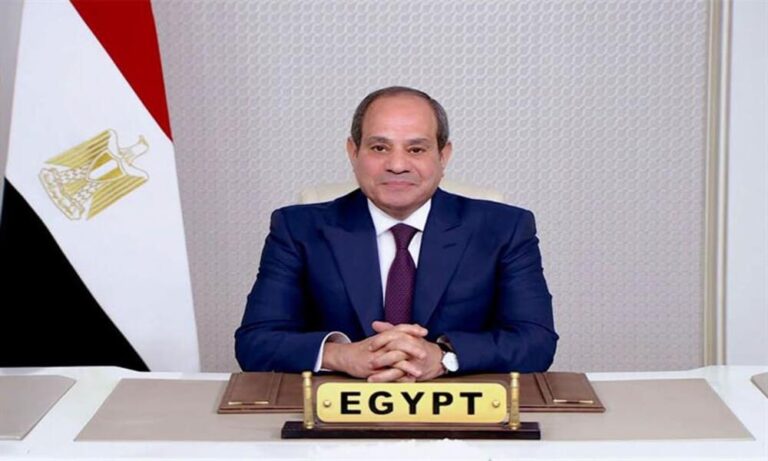
The Egyptian President, Abdel Fattah Al-Sisi, has called for an overhaul of the multilateral system and for greater African participation in the formulation of international rules.
President Al-Sisi made the plea while addressing the opening of the sixth edition of the Aswan Forum, on Saturday, November 21, in Aswan, against the backdrop of geopolitical fragmentation, rising debt, and economic vulnerabilities.
He advocated for a more significant role for Africa in global governance and for a profound reform of the multilateral system and urged the continent to move beyond its status as a mere recipient of international decisions and instead become a full-fledged participant in their creation.
The Egyptian head of state framed his remarks within a context defined by accelerating geopolitical shifts and the interconnected nature of regional and international crises.
According to him, Africa faces a dual vulnerability: internal conflicts that undermine its stability and jeopardize its development paths, alongside the economic fallout from international confrontations.
Rising energy and food prices, disruptions to supply chains, and an increasing debt burden all impose additional constraints on African economies.
In the face of these vulnerabilities, Al-Sisi called for the preservation of multilateral cooperation, while acknowledging the shortcomings in how the current system functions.
“The flaws that characterise the multilateral system should not be a justification for abandoning it; rather, they should serve as a call to reform and renew it on a fairer and more balanced foundation,” he stated.
He particularly emphasised the need to strengthen collective action in response to crises whose repercussions now extend well beyond national borders.
The issues at stake are also financial and economic. The Egyptian president called for a reform of the international financial system to facilitate access to long-term financing on affordable terms for developing countries. Easing the debt burden, combating poverty, and reducing inequality were among the priorities he highlighted.
This approach reflects a core concern for African economies: securing sufficient fiscal space to invest in infrastructure, public services, and productive transformation, without compromising their budgetary stability.
Peacebuilding, reconstruction, and development in post-conflict territories also featured prominently in his remarks. Al-Sisi asserted that these challenges represent a shared international responsibility, calling for a concerted effort to support the countries in question—both in Africa and the Arab world.
MK/AK/Sf/fss/gik/APA