



A call for more tax contributions launched by the Tunisian Minister of Finance before parliament sparked a controversy against the backdrop of high tax pressure, a decline in household savings and persistent economic difficulties.
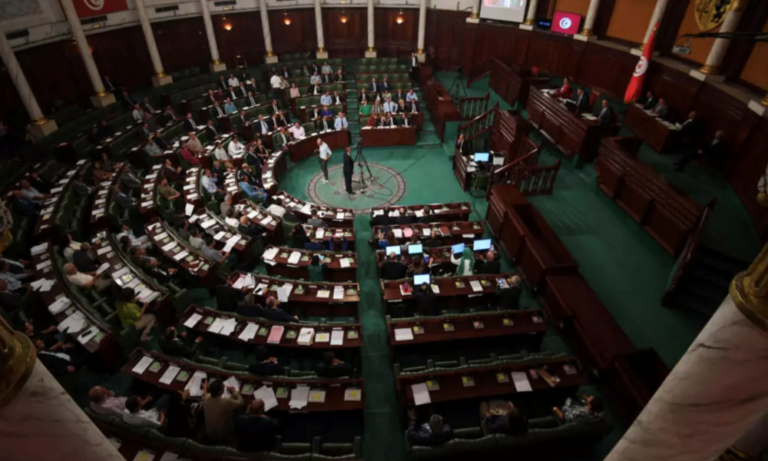
Michket Salama Rachdi, caused controversy after declaring, Friday, November 13, in front of MPs that “everyone must today dip their hand in their pocket to help their country”.
She also called on holders of hidden capital to declare them, believing that tax revenues constituted an essential resource for public finances.
These remarks were made as part of the parliamentary hearings devoted to the budgetary orientations of the various ministries for the 2027 finance bill. If the intervention targeted in particular the practices of tax fraud and evasion, its formulation provoked numerous reactions,
relaunching the debate on the contributory capacity of households and businesses.
Several economists have notably denounced the limits of a policy based essentially on the mobilization of new tax revenues.
They highlighted the inadequacies in the recovery of unpaid tax debts, the weight of the informal economy and the undervaluation of the state’s land assets.
So many potential resources that could help improve public revenue without further increasing the pressure on taxpayers already subject to tax.
The situation of households is also a cause for concern. The decline in national savings, which would have halved between 2021 and 2025, illustrates the financial difficulties faced by many Tunisian families. In this context, the call for an additional contribution from citizens appears particularly sensitive, while purchasing power remains under pressure.
The controversy, however, occurs in a particular budgetary situation.
The 2027 finance bill does not provide, according to the guidelines presented to parliament, for new tax increases. Government projections even show an expected decline in the rate of tax pressure, according to indications communicated by the Ministry of the Economy and Planning.
Beyond the controversy sparked by this declaration, the debate reveals the difficulties of the Tunisian state in reconciling revenue mobilisation, sustainability of public finances and preservation of purchasing power.
Above all, it raises the question of the effectiveness of the tax system and the distribution of contributory effort in an economy faced with structural budgetary constraints.
MK/AK/Sf/fss/as/APA