



The African Union (AU) has reaffirmed its commitment to Mali, signaling that it will remain a key player in finding solutions for the country despite Bamako’s suspension from its institutions since the collapse of the constitutional order in 2021.
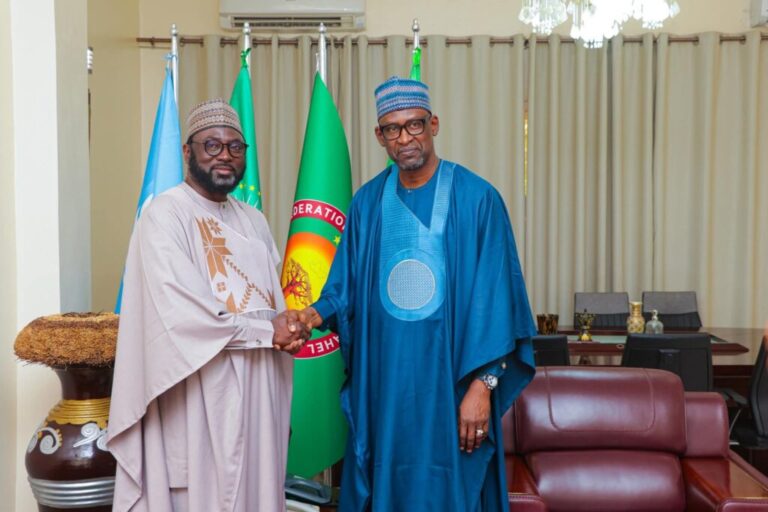
This commitment was highlighted during a significant meeting on November 17, 2025, between Malian Foreign Minister Abdoulaye Diop and the new Special Representative of the Chairperson of the AU Commission, Dr. Mamadou Tangara.
The discussions centered on cooperation priorities, taking into account the evolving partnership sought by the Malian authorities. This dialogue is especially critical given the new sub-regional geopolitical context, characterized by the strengthening of the confederal framework between Mali, Niger, and Burkina Faso in the Sahel States Alliance (AES).
Minister Diop welcomed the climate of dialogue established by the current AU Commission team. He reiterated Mali’s deep commitment to Pan-Africanism while stressing the need for international organizations to fully integrate the country’s current security and political realities into their analyses.
Dr. Tangara, formerly the Gambian Minister of Foreign Affairs and his country’s Permanent Representative to the United Nations, assured the Malian minister that the AU will remain a vital force in finding solutions for Mali. He expressed his desire to strengthen cooperation while respecting the country’s principles and interests.
This diplomatic engagement comes as the African Union Commission recently called for increased international support for Mali, noting that the security and humanitarian situation demands greater solidarity. The country continues to face significant challenges in its central and northern regions despite institutional reorganization and a realignment of regional alliances.
The AU is proactively seeking to maintain an active presence in Mali without waiting for the formal lifting of the suspension. The organization views political and technical engagement as essential to support national efforts and avoid complete isolation. This approach aims to encourage ongoing dialogue on the political transition, security issues, and regional cooperation.
The stability of Mali remains a strategic issue for the entire Sahel region, where rapid military, political, and social dynamics are unfolding, and where armed groups pose an increasing risk to continental security.
MD/ac/Sf/fss/abj/APA