



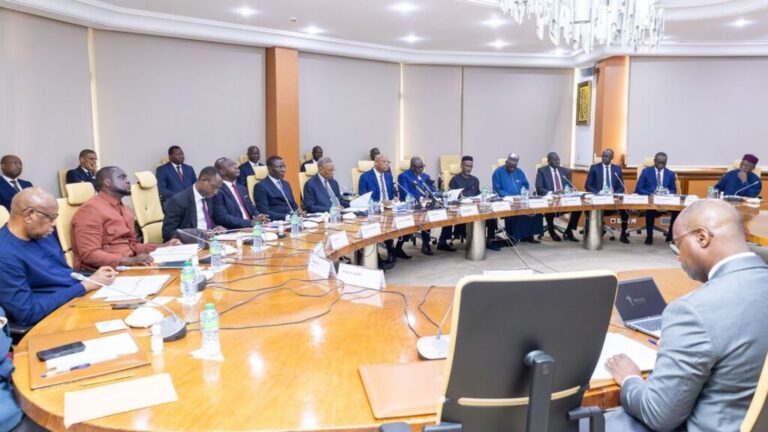
The Central Bank of West African States (BCEAO) held the third session of its Monetary Policy Committee (MPC) meeting in Dakar on Wednesday, September 9, 2026, and resolved to keep its key policy rates unchanged.
The BCEAO’s main policy rate remains set at 3%, while the marginal lending facility rate stays at 5%, while the reserve requirement ratio applicable to subject institutions is also maintained at 3%.
This decision of the MPC comes against a backdrop of sustained economic growth within the Union and a moderate rise in inflation.
Growth of 6.1% projected for 2026
To justify maintaining its rates, the Monetary Policy Committee examined, among other factors, international and regional economic trends, as well as the outlook for inflation, economic activity and the external position.
On the growth front, indicators remain favourable. Economic activity in the Union grew by 6% year-on-year in the second quarter of 2026, following 6.1% growth in the previous quarter.
The BCEAO projects growth of 6.1% for the full year of 2026. This momentum is driven by performance across all economic sectors.
For the Central Bank, this robust activity is a key factor in assessing monetary policy, while financing conditions for the economy are still considered adequate.
Inflation rises to 0.4%
However, price trends are receiving close attention from the BCEAO.
After recording inflation of -0.2% in the first quarter of 2026, the Union saw a rise in the second quarter, with a rate of 0.4%. This rise is primarily driven by increased transport costs, resulting from higher petroleum product prices across most of the Union’s member states.
The BCEAO also notes rising prices for housing and several food items, particularly meat, fish and vegetables.
This trend may continue in the coming months. For the full year 2026, the Central Bank projects average inflation of 1%, compared to 0% in 2025.
However, risks remain tilted to the upside, particularly due to uncertainties surrounding the crisis in the Middle East.
Private sector credit is rising
Another positive indicator is that financing for the economy remains satisfactory.
Bank lending to the private sector grew by 6.6% by the end of June 2026, up from 6% at the end of March.
This trend confirms that bank financing remains relatively dynamic, against a backdrop of robust economic activity within the Union.
The decision to keep the key policy rate at 3% allows the BCEAO to maintain current monetary conditions, while closely monitoring potential inflationary pressures.
A strengthened external position
The Union’s external position also improved during the second quarter.
This improvement was driven notably by the increased value of exports of gold, cotton, cocoa and petroleum products.
These results contribute to strengthening the Union’s external position and represent another positive factor considered by the Monetary Policy Committee.
The Central Bank calls for continued fiscal consolidation
While the regional apex bank is maintaining its monetary policy stance, it is simultaneously calling on member states to persist with the efforts already underway on the fiscal front.
The meeting’s conclusions will be submitted to the Union’s Council of Ministers at its next session.
On that occasion, the Bank intends to reiterate the need for continued fiscal consolidation to strengthen member states’ capacity to withstand various economic shocks.
BCEAO Governor Jean-Claude Kassi Brou also emphasized the need to remain attentive to developments in the economic and financial situation.
Vigilance remains essential
Maintaining key interest rates does not mean the BCEAO is letting its guard down.
The Monetary Policy Committee indicates that it will continue to pay close attention to risks associated with price trends and monetary conditions.
It reserves the right to take appropriate measures, if necessary, to safeguard the Union’s monetary and financial stability.
For the time being, the decision to maintain the status quo reflects a desire to strike a balance between supporting economic activity, controlling inflation and ensuring financial stability.
The BCEAO is therefore keeping its main policy rate at 3% against a backdrop of solid growth, rising private-sector credit and the inflation that, despite a slight uptick, remains contained.
However, the coming months will be crucial, particularly regarding the evolution of the crisis in the Middle East and its potential impact on energy and food prices.
TE/Sf/fss/gik/APA