



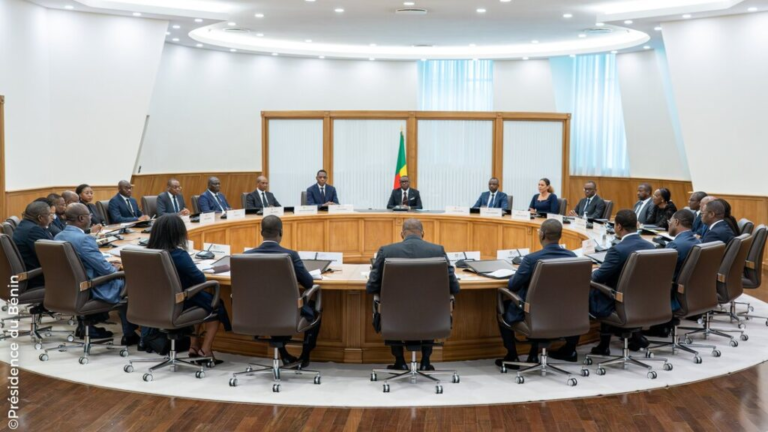
Benin has taken a significant step toward establishing the upper house of its parliament with the announcement of the first appointments to the Senate.
Following a Cabinet meeting on July 1, Beninese President Romuald Wadagni selected ten prominent figures to serve in the body, including Alassane Seidou, Fortunet Alain Nouatin, Robert Gbian, Taffa Adam, Albert Ezin Badou, Ousmane Batoko, Raïmi Amadou, Paul Hounkpè, Emmanuel Tiando, and Pascal Irénée Koupaki. Additionally, National Assembly Speaker Joseph Djogbénou appointed four individuals: Adidjatou Mathys, Abraham Zinzindohoué, Sacca Lafia, and Charles Toko. These fourteen initial appointees will serve alongside ex officio members designated by the Constitution, a group that comprises former presidents of the Republic, former speakers of the National Assembly, and former presidents of the Constitutional Court.
The creation of the Senate stems from a major constitutional revision adopted overnight between November 14 and 15, 2025, which was later promulgated on December 17, 2025, under Constitutional Law No. 2025-20. This historic reform officially introduced a bicameral legislative system to Benin. Under this updated constitutional framework, the Senate is specifically tasked with helping regulate the country’s political life while fostering national unity, democracy, public safety, and peace.
In terms of legislative duties, the Senate will participate directly in the lawmaking process by reviewing bills passed by the National Assembly. It also holds the authority to request a second reading for certain pieces of legislation, though finance bills are explicitly excluded from this power. These inaugural appointments pave the way for the formal installation of the Senate, which stands as a centerpiece of Benin’s structural constitutional reforms taking effect ahead of the 2026 presidential election.
TE/Sf/lb/abj/APA