



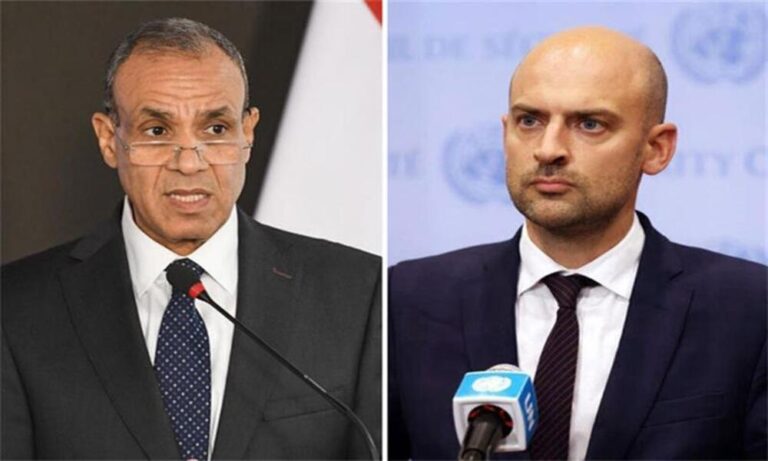
Egyptian Foreign Minister Badr Abdelatty spoke by telephone with his French counterpart, Jean-Noël Barrot, to discuss the latest regional developments and explore effective pathways to de-escalate growing tensions.
According to an official statement published by the Egyptian Ministry of Foreign Affairs on Monday, June 8, the high-level diplomatic call is part of an ongoing framework of strategic consultations between Cairo and Paris. During the conversation, Abdelatty outlined Egypt’s intensive, multifaceted efforts to contain the current escalation and prevent further instability across the region.
Abdelatty explicitly reaffirmed Egypt’s support for the active negotiation process between the United States and Iran, emphasizing Cairo’s firm commitment to easing regional friction and maximizing the chances of securing diplomatic solutions to the ongoing crisis. The telephone call also served as a platform for both foreign ministers to exchange strategic views and assessments regarding the volatile security situations in the Gaza Strip and Lebanon. In light of these challenges, the two diplomats formally agreed to sustain close coordination and bilateral consultations, reinforcing the deep strategic relationship that connects Egypt and France as they work together to promote security and stability.
This diplomatic engagement aligns with the groundwork laid in May 2026, when French President Emmanuel Macron visited Egypt to reaffirm the mutual commitment of Paris and Cairo toward building a lasting strategic partnership. Both nations view this alliance as a vital axis of stability and shared influence spanning the Middle East and the Mediterranean. The latest exchange between the foreign ministers comes at a critical geopolitical juncture, following statements from US President Donald Trump indicating that American diplomacy is making final efforts toward securing a comprehensive agreement with Iran. President Trump noted that negotiations are in the final stages of what he described as a highly favorable agreement, hinting at a tight timeframe of just two to three days for its finalization.
These high-stakes diplomatic maneuvers are taking place immediately after the sudden cessation of unprecedented, reciprocal airstrikes that disrupted a fragile truce established two months prior. Following 100 days of intense warfare and the subsequent implementation of a ceasefire on April 8, explosions and air raid sirens abruptly shattered the peace in Tehran and Tel Aviv over the weekend. The renewed aerial attacks on Sunday and Monday ultimately left 15 people wounded in Iran, according to official figures released by the head of the national emergency response organization, underscoring the urgency behind the Egyptian and French push for regional de-escalation.
AK/Sf/fss/abj/APA