





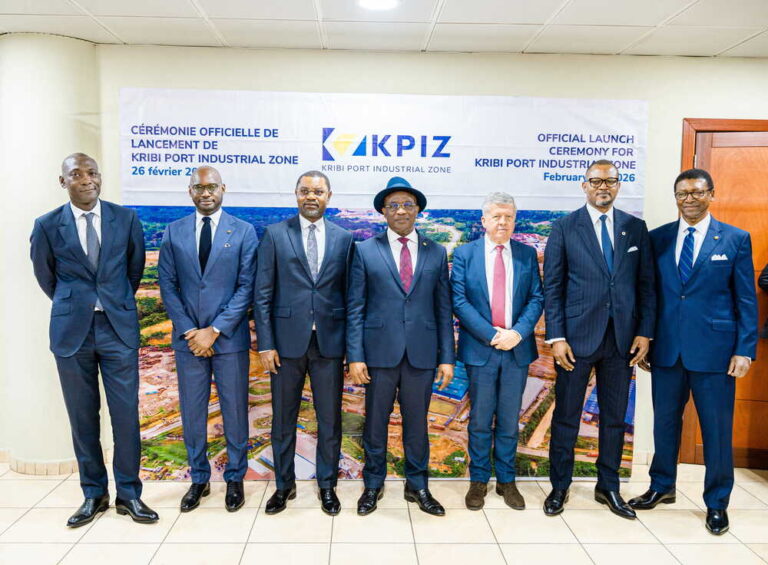
The launch of the Kribi Port Integrated Industrial Zone (KPIZ) this Wednesday in Yaoundé marks a pivotal step in Cameroon’s journey toward industrialization and economic growth.
Supported by the African Development Bank (AfDB) Group, the project was officially inaugurated during a ceremony led by Patrice Melom, Chairman of the KPIZ Board and Managing Director of the Autonomous Port of Kribi. The event brought together key shareholders, including Africa Global Logistics (AGL), Arise Integrated Industrial Platforms, and Belmont Investments LTD, alongside government officials and international diplomats.
Situated adjacent to the Autonomous Port of Kribi, which serves as a major maritime hub for Central Africa, the new industrial zone is designed to act as a primary engine for Cameroon’s Industrialization Master Plan and National Development Strategy. Its core mission is to diversify national production, bolster the manufacturing sector, and significantly enhance the country’s export capabilities. By 2040, the project is expected to deliver substantial economic rewards, including a dramatic rise in cocoa exports from roughly 11,500 tonnes in 2025 to over 191,000 tonnes. Furthermore, the initiative is projected to generate 50,000 direct jobs and 150,000 indirect positions, creating a multiplier effect that could see the economic impact reach twenty times the initial investment.
The African Development Bank is serving as the lead strategic partner for the project, mobilizing €411 million in public funding and facilitating another €384 million in private investment. Leandre Bassole, the AfDB’s Director General for Central Africa, highlighted that this partnership relies on a synergy where the government provides strategic vision, the private sector supplies capital and expertise, and the Bank ensures financial leadership and coherence. Beyond the financial contributions, the Bank is also providing technical support to build local capacity and ensure the zone adheres to high standards for energy efficiency, resource management, and climate resilience.
Ultimately, the KPIZ is intended to transform the Port of Kribi into a world-class industrial hub that serves as a catalyst for inclusive growth and economic integration across the entire Central African sub-region. As Patrice Melom noted, the initiative merges high-level port performance with investor expertise to drive structural economic transformation. This regional hub of competitiveness is poised to become a cornerstone of sustainable job creation and long-term stability for the Cameroonian economy.
TE/Sf/fss/abj/APA