



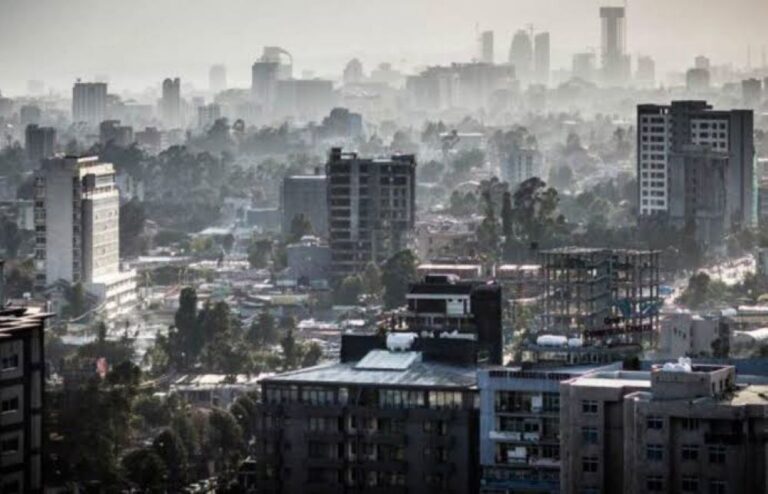
A NASA-funded air quality study has found that average carbon concentrations in Addis Ababa were approximately four to nine times higher than levels recorded in three United States cities- Los Angeles, Atlanta and Boston.
The findings come from a new study published in ES&T: Air, based on measurements collected between 2022 and 2025 from 10 air-quality monitoring sites deployed across Addis Ababa under NASA’s Multi-Angle Imager for Aerosols (MAIA) project.
The study found that Addis Abeba’s three-year average concentration of fine particulate matter, known as PM2.5, was 30 micrograms per cubic metre. NASA said this was more than three times the annual health-based PM2.5 standard set by the U.S. Environmental Protection Agency.
Black carbon, commonly known as soot, is a component of fine particulate matter produced by combustion sources such as fires, diesel vehicles and other fuels.
“To our knowledge, this is the first long-term, multisite study of continuous PM2.5 and black carbon measurements in Ethiopia,” Sina Hasheminassab, a co-author of the study and MAIA’s deputy principal investigator at NASA’s Jet Propulsion Laboratory, said in the article published by NASA.
The finding also revealed differences in pollution patterns across the city and over time. It said black carbon levels increased during rush hours and during two major holidays associated with bonfires, with the monitoring network able to distinguish particles originating from fires from those linked to fossil-fuel combustion.
Araya Asfaw of Addis Ababa University, a co-author and MAIA’s lead Ethiopian collaborator, said emissions remain significant even at night when traffic decreases, citing charcoal and other fuel combustion as contributors.
The findings come as Ethiopia pursues measures aimed at improving air quality. In 2024, the country became the first in the world to ban the import of internal-combustion-engine vehicles, while Addis Ababa has expanded bicycle infrastructure and electric-vehicle facilities.
The NASA findings add to previous warnings about deteriorating air quality in Addis Ababa.
In August 2025 a Swiss air-quality technology company IQAir reported that the Ethiopian capital ranked among the world’s most polluted major cities, placing fourth globally.
MG/as/APA