



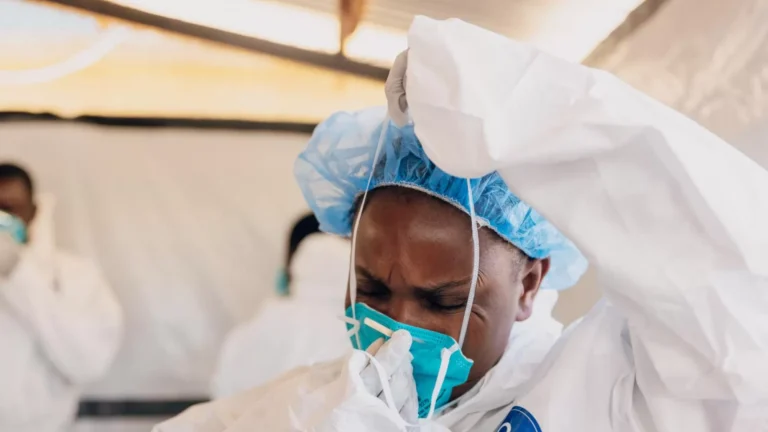
The introduction of the new initiative comes after its ministry of health’s statistics showed that more than 50 percent of deaths recorded in Tanzanian hospitals involve patients who required emergency medical care. Known as Acute Care Transformation through Basic Emergency Care (ACT-BEC), the initiative was launched this year through a partnership involving the World Health Organization (WHO), the governments of the four countries and the African Federation for Emergency Medicine (AFEM).
The initiative, which was earlier introduced by Ethiopia, Rwanda and Uganda, aims to strengthen the capacity of health facilities and hospitals to provide emergency care, particularly at lower levels of the health system, where most patients initially seek treatment. Speaking to journalists on the sidelines of the Fourth African Conference on Emergency Medicine (AfCEM 2026) in Arusha over the weekend, Tanzania’s ministry of health’s director of emergency and disaster services, Erasto Sylvanus, said Tanzania would apply the initiative across 248 health facilities across 24 regions of Mainland Tanzania.
“We have prioritized community-level facilities because statistics show that approximately 80 percent of patients initially seek care at lower-level health facilities,” he said. “Strengthening the capacity of healthcare workers in these facilities is therefore critical to reducing preventable deaths,” he added. Sylvanus said successful implementation of the initiative could help prevent up to 50 percent of hospital deaths if patients were identified early and received appropriate treatment without delay.
He added that the initiative would also involve research to assess the effectiveness of the training approaches and their outcomes, helping identify the best ways to extend emergency care services to more health facilities across the country. The initiative which would be implemented in partnership with the World Health Organization (WHO) aims to strengthen emergency medical services and reduce preventable deaths in low-and middle-income countries, starting with the four African nations.
WHO’s head of the clinical services and health systems unit in the department of integrated health services, Dr Teri Reynolds, said emergency care was a critical pillar of any health system but remained inadequately accessible in many parts of Africa. She said this gap contributed to preventable hospital deaths, although some patients could survive if they received appropriate care early enough.
Evidence from several countries in Africa and Asia, she said, showed that quality emergency care could save more than 80 percent of the lives of patients who needed it, underscoring the importance of expanding access to such services.
MG/abj/APA