



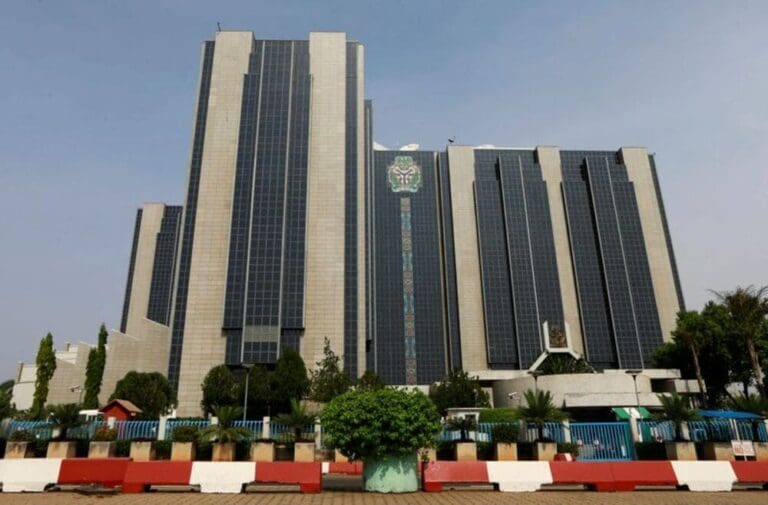
The Central Bank of Nigeria (CBN), says that incentives should be targeted at manufacturers that are producing for exports.
The Governor of the CBN, Mr. Olayemi Cardoso,,said at the 54th Annual General Meeting (AGM) of the Manufacturers Association of Nigeria (MAN), Apapa Branch in Lagos, that manufacturers should lead efforts to diversify Nigeria’s foreign exchange earnings from crude oil dependence.
Represented by Mr Aliyu Ashiru, Head Division, Trade & Exchange Department of the CBN, Mr Cardoso stressed that manufacturing held significant potential to conserve foreign exchanged, expand exports with value-added products, create jobs at all levels, and enhance macroeconomic stability.
He emphasized the need for a deliberate, coordinated, and long-term strategy to unlock the sector’s full potential and transform it into a major foreign exchange earner.
Cardoso listed strategic pillars for growth, including policy alignment, investment in infrastructure and energy, access to finance and forex, value addition, and backward integration.
According to him, there is a need for a comprehensive industrial policy prioritising export-oriented manufacturing.
“This policy must be stable, predictable and aligned with trade, monetary and fiscal frameworks.
“Incentives such as tax holidays, duty waivers for machinery, export rebates and investment guarantees should target manufacturers producing for export markets. Nigeria must move from exporting raw materials to value-added products.
“This requires deliberate investment in backward integration, especially in agro-processing, petrochemicals and solid minerals,” he said.
He assured that the CBN would continue supporting the sector through proactive monetary policies and targeted financing interventions.
In his remarks, the Chairman of MAN, Apapa Branch, Mr. Raphael Danilola, called on the Nigerian government to ensure that the ongoing economic reforms would not lead to the destruction of businesses in the country.
“While we remain supportive of the various reform measures put in place to reposition our economy, we believe that the implementation of such reforms should be in a manner that will contribute to our continued survival and existence.
“The current economic downturn requires measures to help manufacturers stay in business, especially with competition from the continental free trade agreement. Our ability to operate and compete in the regional market depends on government policies and actions that shape the business environment and provide the necessary infrastructure. We call on the government, both at the state and federal levels, to support the sector.”
The theme of the annual meeting was ‘Complementing the oil sector as a major Foreign exchange earner: Strategy for manufacturing to fill the gap”.
GIK/APA