



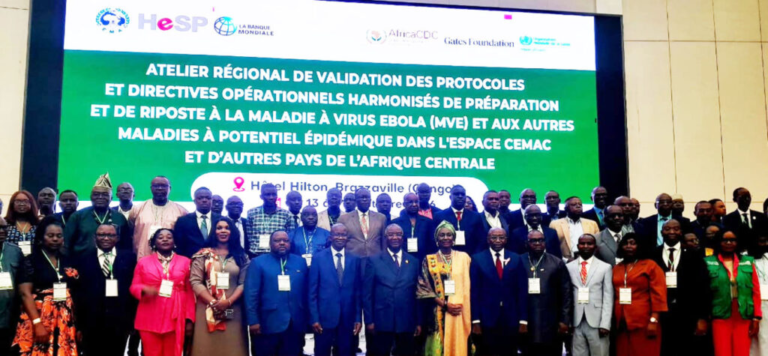
The Member States of the Economic and Monetary Community of Central Africa (CEMAC) are working to harmonise nine common protocols for epidemic preparedness and response, including measures against Ebola, to strengthen cross-border health surveillance and regional coordination.
CEMAC member states launched the process during a regional workshop held in Brazzaville from October 13 to 15, 2026, according to accounts of the meeting.
The initiative aims to strengthen Central African countries’ capacity to detect health threats quickly, share epidemiological alerts and coordinate responses to diseases with epidemic potential, particularly Ebola virus disease.
The protocols under review cover epidemiological surveillance, alert management, health checks at border crossings, the transport of biological samples, contact tracing and patient care. They also address infection prevention and control, safe and dignified burials, risk communication and community engagement.
The work forms part of a roadmap adopted in June 2026 by CEMAC health ministers. An assessment conducted in July identified gaps in health preparedness at points of entry and border crossings, with preparedness rated at 43%, below the approximate acceptability threshold of 70%, according to available reports.
The workshop brings together the six CEMAC member states: Cameroon, the Central African Republic, the Republic of the Congo, Gabon, Equatorial Guinea and Chad. Delegations from the Democratic Republic of the Congo, Burundi and São Tomé and Príncipe are also taking part in the discussions.
Several technical partners are supporting the initiative, including the World Health Organization (WHO), Africa Centres for Disease Control and Prevention (Africa CDC), UNICEF, the United Nations Food and Agriculture Organization (FAO) and the United Nations Development Programme (UNDP).
The workshop focuses on the technical validation of the protocols. Harmonising them is expected to improve cooperation among countries, particularly in border areas where the movement of people and goods requires coordinated surveillance to prevent the spread of epidemics.
TE/Sf/lb/gik/APA