



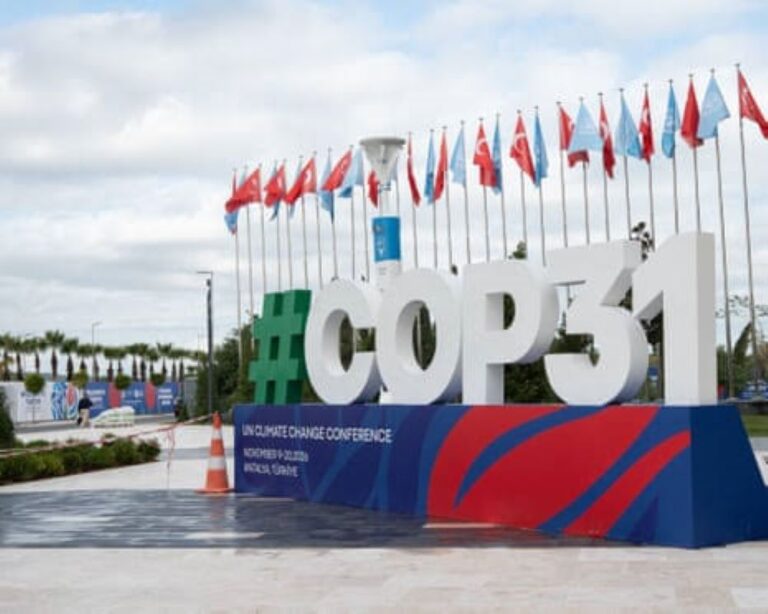
Africa’s push for greater climate justice has suffered an early negotiating setback at the ongoing COP31 climate negotiations in Antalya, Türkiye.
The continent’s proposal on tripling adaptation finance for developing countries by 2035 failed to gain approval.
The Chair of the African Group of Negotiators (AGN) on Climate Change, Dr Antwi Amoah of Ghana, confirmed that the proposal to give the tripling of adaptation finance a dedicated place on the COP31 agenda had not been adopted.
The outcome has raised concerns about the future of financial support for vulnerable communities already grappling with increasingly unpredictable weather patterns, prolonged droughts, devastating floods and rising temperatures.
The outcome does not reverse the international commitment to increase adaptation finance, but it leaves unresolved questions about the financing baseline, delivery timetable, monitoring arrangements and responsibilities of contributing countries.
The European Union had opposed creating a separate negotiating item, maintaining that the adaptation finance commitment could be addressed through existing climate finance processes. European negotiators nevertheless reaffirmed their support for tripling adaptation finance.
The development presents a challenge for Africa’s climate diplomacy, particularly as the continent continues to press developed countries to translate their climate finance pledges into tangible support.
At the centre of the disagreement is how the commitment to triple adaptation finance will move from political declarations to actual funding for the countries and communities that need it most.
The disagreement follows a commitment reached at COP30 in Belém, Brazil, in 2025, when governments agreed under the Global Mutirão decision to pursue at least a threefold increase in adaptation finance for developing countries by 2035.
Those unresolved provisions have become central to the negotiations in Antalya.
The financing dispute comes as the gap between adaptation investment needs and available international resources continues to widen.
According to the United Nations Environment Programme’s Adaptation Gap Report 2026, released on November 4, international public adaptation finance from developed to developing countries reached between 28.2 billion and 31.7 billion US dollars in 2024.
By comparison, developing countries are projected to require approximately 305 billion US dollars annually by 2035 to respond to climate-related risks.
The report estimates that even if international adaptation finance triples by 2035, the additional resources would cover only 20 to 29 percent of projected financing requirements.
The findings underline the difference between the international financing target and the amount developing economies are estimated to require for climate-resilient infrastructure, agricultural adaptation, water management, disaster prevention and protection against extreme weather events.
The tripling commitment builds on an earlier agreement reached at COP26 in Glasgow in 2021, when developed countries were urged to at least double adaptation finance from 2019 levels by 2025.
That earlier target implied annual financing of approximately 40 billion US dollars.
UNEP’s latest assessment indicates that the doubling target could still have been achieved in 2025, depending on the final financing figures, particularly contributions from multilateral development banks.
The financing discussions also take place within the broader climate finance agreement reached at COP29 in Baku, Azerbaijan, which established a goal of mobilising at least 300 billion US dollars annually for developing countries by 2035.
That broader target covers multiple climate financing purposes, including mitigation and adaptation, rather than adaptation alone.
For Africa, the dispute goes beyond the wording of a negotiating agenda. It concerns the protection of livelihoods, food security, resilient infrastructure and the ability of countries to withstand climate-related disasters.
Millions of people across the continent face growing climate risks despite Africa’s relatively small contribution to global greenhouse gas emissions. Farmers are battling prolonged dry spells, coastal communities face rising sea levels, while families continue to be displaced by floods.
The financial implications are significant. African countries lose an average of 2 to 5 per cent of their gross domestic product (GDP) annually due to climate extremes, while governments spend up to 9 per cent of their annual budgets on unplanned disaster relief and climate response.
However, securing another reference to the tripling commitment will not, on its own, guarantee that the money is delivered. Negotiators must establish a credible financing framework that clarifies who will provide the funds, where the resources will come from, how they will reach vulnerable countries and communities, and how delivery will be monitored and enforced.
The commitment to triple adaptation finance was agreed at COP30 in Belém, with 2035 set as the target year. However, the agreement left critical questions about its scope, baseline, delivery timelines, milestones and accountability arrangements unresolved.
MG/as/APA