



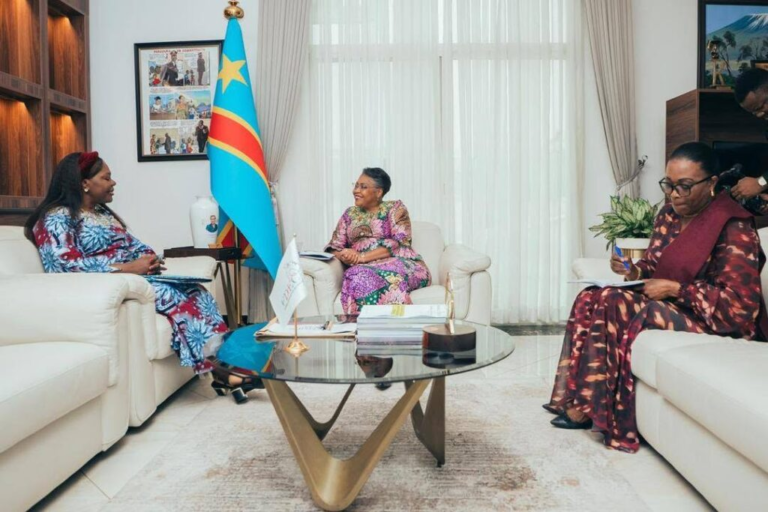
The Democratic Republic of the Congo and the United Nations High Commissioner for Refugees are strengthening cooperation to accelerate the voluntary return of more than 100,000 Congolese refugees currently living in Burundi.
The issue was at the centre of discussions on Monday in Kinshasa between Prime Minister Judith Suminwa Tuluka and UNHCR representative Brigitte Mukanga.
The repatriation initiative comes amid a relative improvement in the security situation in parts of eastern DRC, opening the way for the gradual return of thousands of people displaced by armed conflict.
Burundi has hosted tens of thousands of Congolese refugees for several years, many of whom fled recurring violence in North Kivu and South Kivu provinces, particularly around Goma and Bukavu. Taking advantage of the improved conditions in some areas, UNHCR has already begun the first voluntary repatriation operations.
“With the gradual improvement in the security situation in certain areas, particularly around Bukavu, we have already initiated a voluntary repatriation process to facilitate the return of some refugees,” said Brigitte Mukanga following the meeting.
Despite these efforts, more than 100,000 Congolese refugees remain in Burundi, often living in precarious conditions. UNHCR has called for increased logistical and financial support to ensure a safe and dignified return process.
Prime Minister Judith Suminwa Tuluka reaffirmed the government’s commitment to supporting its citizens abroad. However, significant challenges remain, particularly regarding the reintegration of returnees in regions where social infrastructure is still fragile, especially in health, education, and access to clean water.
The security situation in eastern DRC also remains volatile.
Despite signs of improvement in some areas, clashes involving the M23 armed group continue to displace populations and hinder stabilisation efforts.
For Kinshasa and its international partners, the success of the programme will depend not only on sustained improvements in security but also on the ability to provide returning populations with conditions conducive to long-term reintegration.
TE/Sf/lb/as/APA