





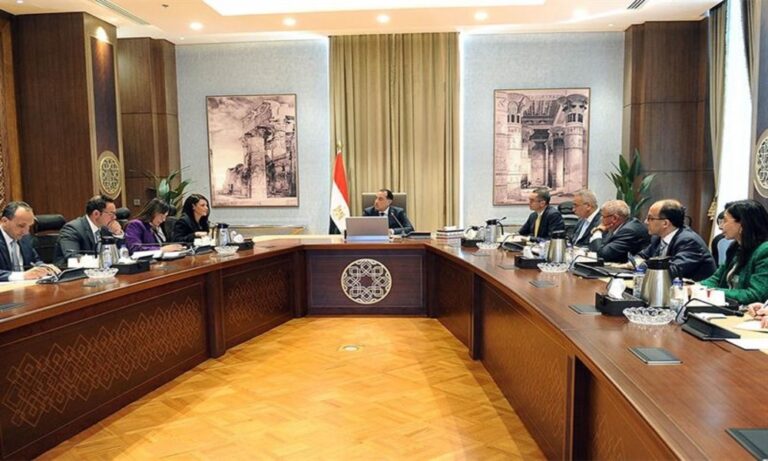
Egyptian Prime Minister Mostafa Madbouly has overseen the final review of the State Ownership Policy document and the organizational structure of the new State-Owned Enterprise (SOE) Restructuring Unit.
These actions fulfill key structural reform commitments made under the country’s program with the International Monetary Fund (IMF).
Prime Minister Madbouly presided over the review of the final updated State Ownership Policy document on Monday, with key officials including Minister of Planning and Economic Development Rania Al-Mashat and Minister of Investment and Foreign Trade Hassan Al-Khatib in attendance. This review is timely, as an IMF mission is currently in Cairo to monitor progress under the $8 billion loan program.
Madbouly also reviewed the organizational structure of the new State-Owned Enterprise Restructuring Unit. This specialized unit has been established to optimize the management of state assets and accelerate the sale or initial public offering (IPO) of state-owned enterprises.
According to the Council of Ministers spokesperson, Mohamed Al-Homsani, the Restructuring Unit is now the sole competent authority responsible for organizing all procedures related to SOEs and monitoring their restructuring, in coordination with relevant ministries.
The Prime Minister underscored the importance of “maximizing the role of the private sector,” labeling it as an essential partner for supporting sustainable economic growth, strengthening the country’s competitiveness, and creating jobs.
He stressed that evaluating implemented measures using objective indicators is critical for measuring the real impact of private sector participation on the economy and on competitive neutrality.
Discussions specifically addressed state-owned enterprises currently being prepared for sale or an upcoming financial market listing. Madbouly called for increased coordination across government authorities to accelerate these processes, which are considered priorities for attracting greater investment and improving the efficiency of state asset management.
Al-Homsani noted that the creation of the Restructuring Unit serves a dual purpose: to improve financial discipline and ensure more transparent management of public assets. This initiative aims to “maximize economic performance and support sustainable development,” while maintaining state control over assets deemed strategic. The government anticipates that these reforms will bolster the confidence of international investors and successfully meet the IMF’s structural reform expectations.
MK/Sf/fss/abj/APA