



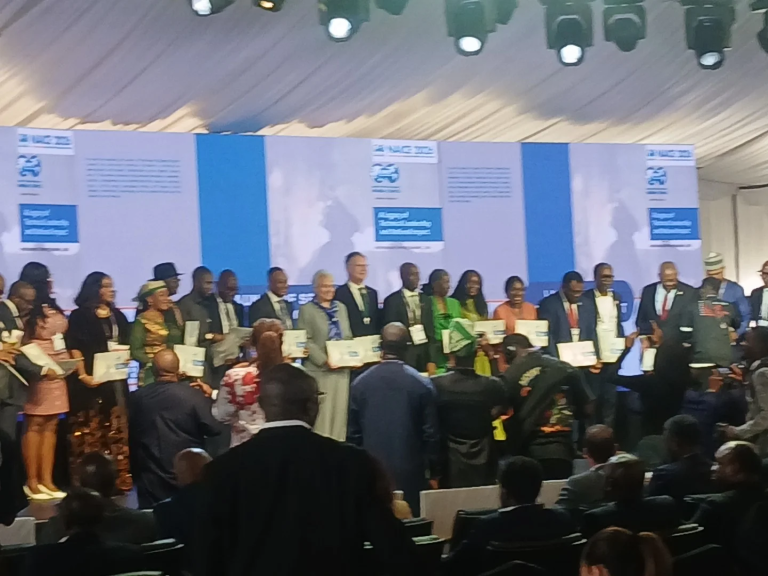
The Chief Executive of the Nigerian Upstream Petroleum Regulatory Commission (NUPRC), Mrs Oritsemeyiwa Eyesan, has called for stronger collaboration among government and industry stakeholders to build a resilient, globally competitive petroleum sector to drive Nigeria’s economic growth and energy security.
Delivering a keynote address at the ongoing 49th Society of Petroleum Engineers Nigeria Annual (SPE), International Conference and Exhibition (NAICE 2026) on Monday in Lagos, Mrs. Eyesan said that sustained dialogue and partnerships were critical to positioning Nigeria to thrive amid the rapidly evolving global energy landscape.
She described the conference as one of Africa’s foremost technical and strategic energy platforms, noting that since its inception in 1976, it has continued to bring together policymakers, regulators, industry leaders, researchers, innovators, and young professionals to shape the future of the oil and gas industry.
According to her, this year’s conference theme, which has theme, “Thriving in the Evolving Global Energy Landscape: Collaborative Growth and Resilience,” reflects the realities confronting the industry.
“For us in Nigeria, this conference is much more than another annual event. It is an important platform where ideas are transformed into action,” she said.
Eyesan noted that many of the reforms currently transforming Nigeria’s upstream petroleum sector were influenced by recommendations and technical contributions from industry engagements such as the SPE conference and similar professional forums.
She stated that the commission’s regular consultations with operators and other stakeholders have helped create a more transparent, predictable, and investor-friendly regulatory environment.
“The best policies and regulations are built through collaboration. By listening, learning, and working together, we are building a regulatory system that is practical, responsive, and forward-looking,” she said.
The NUPRC chief stressed that resilient energy systems, sustained investment and long-term industry growth could only be achieved through strong partnerships.
She added that technical conferences and workshops provide strategic platforms for developing solutions that strengthen regulatory frameworks and improve the investment climate.
She encouraged participants to engage in robust discussions, challenge existing assumptions, and propose practical solutions to the challenges facing the petroleum industry.
She assured them that the commission would continue to consider stakeholders’ recommendations in shaping future policies and regulations.
Expressing optimism about the country’s prospects, Eyesan said Nigeria possesses significant competitive advantages, including abundant oil and gas reserves, a vibrant indigenous petroleum industry.
“We have young and skilled workforce, an improving regulatory framework, and a strategic geographic location that connects it to regional and global markets,’’ she said.
Eyesan congratulated the SPE Nigeria Council on the successful hosting of the conference and urged stakeholders to move beyond discussions by working together to build an energy industry that supports sustainable economic growth and national energy security.
“Together, let us move beyond discussing the future of energy to build it through collaboration, innovation, and resilience, so that Nigeria not only thrives in the evolving global energy landscape but also helps shape it,” she added.
In his remarks, the Chief Executive of the Nigerian Midstream and Downstream Petroleum Regulatory Authority (NMDPRA), Mallam Rabiu Umar, said that Nigeria was on course to becoming Africa’s refining hub.
He pledged a regulatory regime that is firm, fair and fast to drive investment, strengthen energy security, and expand the nation’s gas economy.
Umar outlined the Authority’s priorities for transforming the country’s midstream and downstream petroleum sector.
He said that the Authority’s leadership was anchored on three strategic priorities: energy security, gas expansion, and regulatory excellence.
According to him, these will be pursued through strict compliance with the law, fairness to all stakeholders and improved speed in regulatory decision-making.
“Our regulatory approach will be firm, fair, and fast,” Umar said.
He said that predictable and efficient regulation was essential to attracting investment and supporting industry growth.
The Nigerian downstream petroleum industry, he noted, is undergoing a major transformation with the emergence of large-scale private refineries and modular refineries.
”This is positioning the country to move from exporting crude oil and importing refined products to becoming a self-sustaining refining hub and exporter of refined petroleum products,” he said.
He said that the development would enable Nigeria to retain more value from its crude oil resources while creating opportunities in the petrochemical and gas sectors.
GIK/APA