



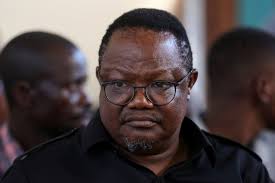
A Tanzanian court on Friday sentenced main opposition leader Tundu Lissu to four years in prison for inciting violence, in a case that has raised concerns about political freedom in the East African country.
A panel of three judges at the High Court in Dar es Salaam, Tanzania’s commercial capital, convicted the 58-year-old leader of the country’s main opposition party, Chadema, over remarks he made calling for electoral reforms.
Lissu, who leads the opposition Chadema party is accused of encouraging his supporters to disrupt the disputed 2025 general election, which he has denied, describing the prosecution as politically motivated.
His arrest came six months before the October vote, shortly after he launched a drive for changes to Tanzania’s electoral system under the slogan “No Reforms, No Election”.
Prosecutors argued that his statements were intended to disrupt the vote and threaten the government, amounting to treason.
Lissu, a lawyer who represented himself during the trial, maintained that his comments had been taken out of context and that he had committed no crime.
“My hope is that you will carry that heavy historical burden without bias, with courage and with the dignity carried by your judicial oaths,” he told the panel in his closing arguments.
The trial drew criticism from British and European Union lawmakers, who described it as politically driven and called for Lissu’s immediate release.
“The use of capital punishment against a political opponent risks turning the justice system into an instrument of political repression,” they wrote in a letter to President Samia Suluhu Hassan.
Security was tightened across Dar es Salaam and around the courthouse ahead of Friday’s verdict, as Lissu’s supporters gathered for the hearing.
Hassan won with 98 percent of the vote after her two main challengers, including Lissu, were excluded. The opposition dismissed the result as a “mockery” of democracy.
A government-appointed commission put the death toll at at least 518, blaming protesters for the violence. Opposition groups and human rights organizations say the authorities killed thousands.
MG/as/APA