



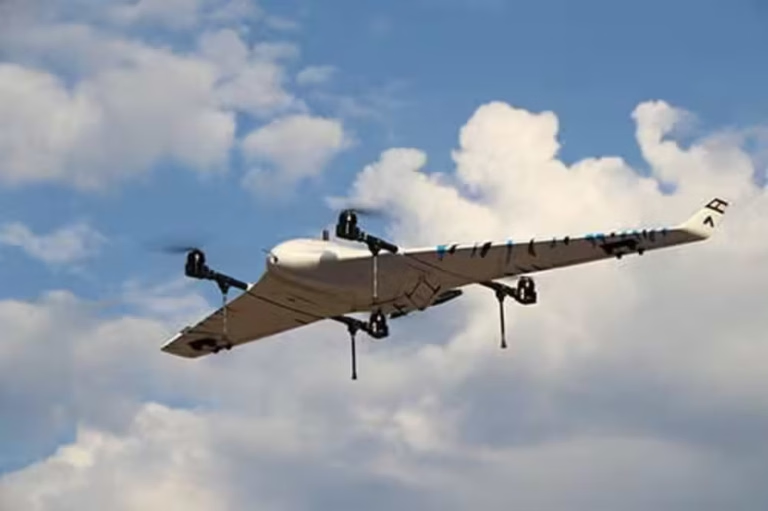
Drone strikes are responsible for almost three-quarters of civilian deaths recorded in Sudan between January and October 2026, while these weapons are now extending the risks to urban areas and humanitarian installations, including in the capital Khartoum, according to the United Nations.
On Sunday, drone strikes hit several residential neighbourhoods in Khartoum and damaged a building occupied by United Nations (UN) employees, the Office for the Coordination of Humanitarian Affairs (OCHA) said, without reporting any casualties or identifying the perpetrators of the attack.
“It is unacceptable that we are exposed to such danger. Under international humanitarian law, humanitarian personnel and goods are protected,” denounced Denise Brown, UN humanitarian coordinator in Sudan, in a message published on the social network X.
This attack comes in a context of intensification of the air war between the Sudanese army and the Rapid Support Forces (RSF), engaged in a conflict since April 2023.
Despite the recapture of Khartoum by the army in March 2025, the capital remains exposed to military operations carried out remotely.
The threat also concerns other cities in the country. On Thursday, drone strikes hit the Almazad neighbourhood of Nyala, South Darfur state, near the premises of humanitarian organisations, according to OCHA.
Essential infrastructure is also affected. In Khartoum state, attacks on electrical installations and fuel depots disrupted the operations of the Umm Badda hospital.
Power cuts and fuel shortages have notably compromised dialysis sessions for patients suffering from kidney failure, according to the World Health Organization (WHO).
The extent of the consequences of this air war emerges from a report by the Office of the United Nations High Commissioner for Human Rights, published on November 17. The organisation recorded at least 2,230 civilians killed between January and the end of October 2026, including more than 1,630 in drone attacks.
These figures, which do not constitute an exhaustive assessment of the victims of the conflict, nevertheless illustrate the growing weight of these weapons in the violence against civilian populations.
Their use allows both camps to strike beyond the territories they control and the front lines, particularly in the regions of Darfur and Kordofan.
The United Nations High Commissioner for Human Rights, Volker Türk, denounced the suffering inflicted on populations and the “constant and brazen disregard for the laws of war” by the warring parties.
More than three years after the start of hostilities, the growing use of drones is expanding the scope of violence, exposing civilians, health infrastructure and humanitarian workers to attacks even in areas far from the main land clashes.
TE/Sf/fss/gik/APA