



The maritime link project between Praia and Dakar, now scheduled to launch in June 2027, is part of the Praia-Dakar-Abidjan multimodal corridor.
It’s an initiative spearheaded by the Economic Community of West African States (Ecowas) and eight countries in the region.
Launched in January 2024, this regional program aims to connect Cabo Verde, Senegal, The Gambia, Guinea, Guinea-Bissau, Sierra Leone, Liberia, and Côte d’Ivoire through an integrated network of road, rail, and maritime infrastructure. Its objectives include facilitating the movement of people and goods, reducing logistics costs, and strengthening intra-community trade.
A significant milestone was reached in May 2024, during a visit to Praia by Senegalese President Bassirou Diomaye Faye. On that occasion, authorities from both Senegal and Cabo Verde reaffirmed their commitment to establishing a direct maritime link between the two nations, with the goal of boosting trade and deepening their economic and social cooperation.
In June 2025, Ecowas and its partners held a workshop in Dakar to evaluate and validate the technical and financial options for this link.
Discussions focused on management and operational models, financial viability, socio-economic and environmental impacts, and funding mechanisms – specifically public-private partnerships and
regional funds. At that time, the service was expected to be operational before the end of 2026.
A few days earlier, from June 25 to 28, 2025, Dakar hosted the technical validation proceedings for the Praia-Dakar-Abidjan corridor.
This meeting was intended to culminate in a final technical report, encompassing feasibility studies, preliminary engineering designs, and financing mechanisms.
On September 12, 2025, in Freetown, the fourth meeting of the Ministerial Steering Committee officially validated the technical studies for the corridor.
These studies notably envisioned a 3,164-kilometre supranational highway, which includes an approximately 600-kilometer maritime link between the countries involved.
The maritime component was also designed to incorporate services connecting Praia, Dakar, Banjul, and Bissau.
A new deadline of June 2027 was established following a directive from the Ecowas Council of Ministers, adopted in Freetown in June 2026.
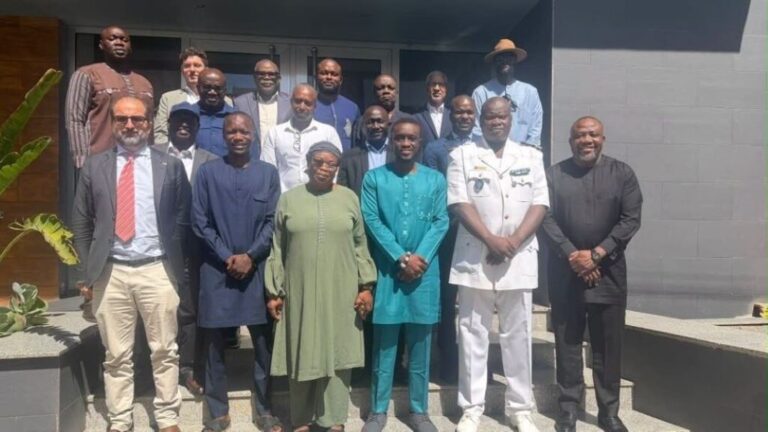
Meetings held on November 12-13, 2026, in Praia clarified the implementation arrangements: the initial launch of a regular container transport service, followed – after two years of operation – by the introduction of a service combining passenger and vehicle transport (RoPax).
Participants also recommended the creation of a joint company bringing together maritime operators from Cabo Verde, The Gambia, Guinea, Guinea-Bissau, and Senegal.
A dedicated project implementation unit is to be established by the end of December 2026 to coordinate operations and prepare for the launch of the service.
Upcoming steps include the modernisation of port facilities, confirmation of the vessels to be deployed, finalisation of operational protocols, and the implementation of a booking and freight
information system.
The Praia-Dakar project thus serves as a maritime component of the Praia-Dakar-Abidjan corridor – an initiative conceived by Ecowas as a key structural axis for economic integration and connectivity in West Africa.
AC/Sf/fss/as/APA