



Morocco is pursuing a long-term strategy based on institutional stability, infrastructure development and industrial diversification to attract foreign investment.
Dakar could draw on this approach as part of its economic transformation agenda, Moroccan ambassador to Senegal Hassan Naciri said on Tuesday.
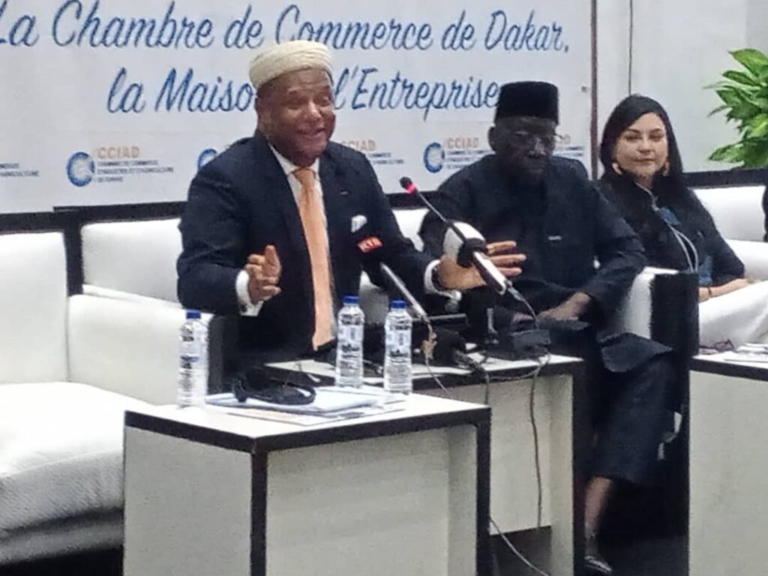
Speaking at a high-level economic debate by the Dakar Chamber of Commerce, Industry and Agriculture (CCIAD) under the theme “Economic diplomacy: Turning international relations into opportunities for growth”, the diplomat outlined the main factors that have helped Morocco strengthen its appeal to international investors.
According to him, this performance relies less on financial incentives than on consistent public policies, a predictable legal framework, quality infrastructure, trade openness and the alignment of training programmes with the needs of the productive sector.
“Attractiveness cannot simply be decreed. It is built over time,” he said, stressing that investment should be viewed as a driver of structural economic transformation.
Morocco’s experience illustrates this approach. Foreign direct investment (FDI) reached $3.34 billion in 2025, up 91% year on year, according to data from the United Nations Conference on Trade and Development (UNCTAD).
This growth is part of an economic opening policy pursued over several decades, characterised by successive reforms, the development of logistics infrastructure and an expanding network of trade agreements. Morocco has notably strengthened its position in the automotive and aerospace industries, whose exports reached approximately 157.6 billion and 26.4 billion dirhams respectively in 2024.
However, for Hassan Naciri, the challenge is not simply to attract capital. The real impact of an investment must also be measured by its contribution to job creation, skills and technology transfer, the integration of local businesses and the diversification of the productive base.
This approach is consistent with Senegal’s ambitions under its development strategy to 2050. The country is seeking to strengthen its production and processing capacities in order to derive greater benefits from international economic partnerships.
Against this backdrop, the Moroccan diplomat highlighted areas of complementarity between the two economies, including agro-industry, fisheries, the pharmaceutical industry, renewable energy, construction materials, financial services and vocational training.
He also recalled that the 15th Senegal-Morocco Joint Commission, held on January 26 and 27, 2026, resulted in the signing of 17 agreements and memorandums covering several sectors, including industry, mining, agriculture, digital technology, logistics and training.
For Morocco, the next step is to turn these commitments into reciprocal investment projects, industrial partnerships and shared value chains, rather than maintaining cooperation focused primarily on trade in finished products.
This ambition takes on particular significance in the context of the African Continental Free Trade Area (AfCFTA), which offers opportunities to develop regional markets and strengthen productive complementarities among African economies.
Hassan Naciri stressed the need for economic diplomacy to become more result-oriented. Diplomatic missions should, in particular, facilitate contacts between business operators, identify commercial opportunities, provide reliable market information and support companies in their efforts to establish business partnerships.
Beyond Morocco’s experience, the debate organised by the CCIAD, with the participation of the ambassadors of Morocco and South Korea, as well as Senegalese diplomats, highlighted a key challenge for Senegal: turning its international relations into an instrument for mobilising productive investment and creating local value.
TE/lb/as/APA