



By columnist Diarra Faye
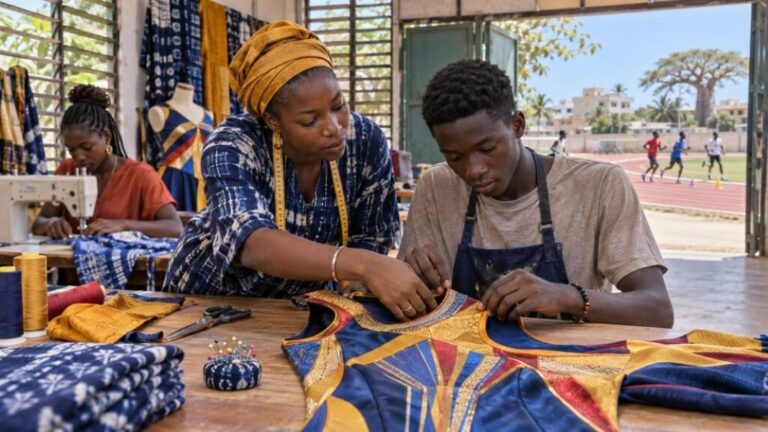
From October 31 to November 13, 2026, Senegal hosted the Youth Olympic Games – the first Olympic event ever held on African soil. The success of Dakar 2026, which was commended by the Economic Community of West African States (ECOWAS), is also a testament to the efforts of the volunteers, technicians, and craftspeople who brought the Games to life. Nearly 1,500 costumes were produced locally for the opening ceremony, with the contribution of around a hundred artisans and creative professionals.
The lesson from Dakar extends beyond the realm of sports. Pulling off such an event required preparing teams, coordinating diverse professional roles, and entrusting responsibilities to young people.
The challenge lies in replicating these conditions in everyday life – across sectors like agriculture, industry, the digital economy, and the creative arts. What could this same generation achieve if they were provided with the means to train, work, and launch ventures within these fields?
When taking stock of Africa’s wealth, the conversation typically begins with gold, oil, gas, cobalt, or copper. Far less is said about the people capable of transforming these resources locally, inventing
new products, and creating jobs. On the world’s youngest continent, the value of this human capital hinges on the opportunities available to every individual to learn a trade, practice it, and advance within it.
The resourcefulness of the African youth is frequently celebrated. Yet, by constantly praising their ability to overcome obstacles, there is a risk that we might simply grow accustomed to those very barriers.
A young entrepreneur might secure clients and orders, only to find herself unable to obtain the credit needed to hire staff. A technician might master his craft, yet spend years without any prospect of promotion. In both cases, the competence is already there. It requires the means to translate potential into jobs and income.
Many young Africans go abroad to study, work, or pursue entrepreneurial ventures. Leaving can be a deliberate choice, a career milestone, or a way to gain experience that can be put to good use
upon returning home.
Yet, how many might choose to stay if they could find – either in their own country or elsewhere on the continent – an entry-level job, access to financing, or opportunities for professional advancement?
The solutions lie in concrete actions. Apprenticeships within companies can pave the way to a first job. Loans can enable small businesses that already have a customer base to hire new staff. In the
agricultural sector, access to storage and processing equipment can help young producers earn a better income from their harvests. Those most directly affected must also have a say in decisions regarding training, funding, and employment policies.
This ambition ties into the broader debate on natural resources.
Processing additional raw materials on the continent requires infrastructure, capital, and sound governance. It also demands technicians to maintain equipment, engineers to adapt processes, and managers to oversee operations. Training these teams can begin as early as the design phase of industrial projects.
Businesses also have a role to play. Beyond simply handling payroll and contracts, human resources teams can identify key skills, facilitate knowledge transfer, and prepare the next generation of talent. Gradually entrusting young employees with greater responsibilities and offering them genuine prospects for promotion is an investment in the next generation of leaders.
In Dakar, the period following the Games already provides a measure of this challenge. Integrating volunteers and providing ongoing support for athletes are among the initiatives already underway. For a young person who has learned how to coordinate a team or host delegations, the legacy of the Games may take the form of training, an initial employment contract, or a new area of responsibility.
The success of Dakar will reach its full significance if the effort invested in the Games continues within workshops, businesses, and agricultural operations. This, too, is how the wealth of a continent is measured: by what a generation can learn, produce, and pass on.
DF/ac/fss/as/APA