



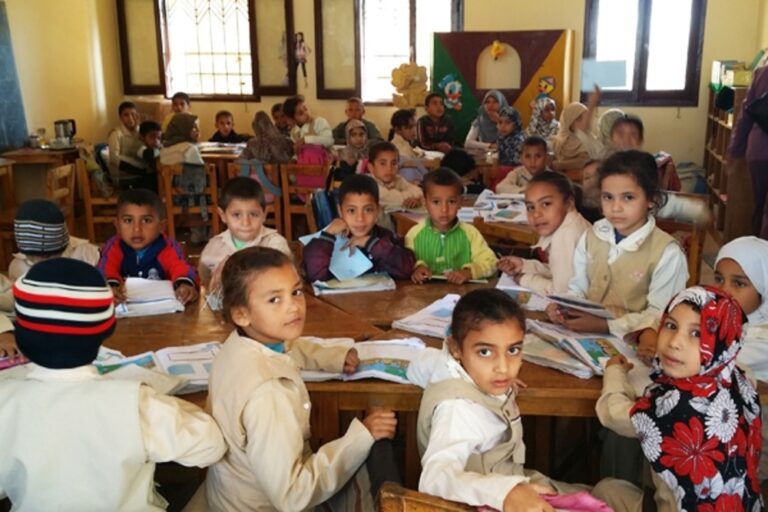
Human Rights Watch (HRW) has accused the Egyptian government of systematically undermining the rights to education and healthcare through chronic underfunding, warning that budget allocations for both sectors have fallen sharply over the past five years despite constitutional obligations and international benchmarks.
In a report released on Wednesday, HRW said Egypt’s spending on education and health has declined in inflation‑adjusted terms and as a share of total government expenditure and GDP, leaving schools and hospitals unable to meet basic needs.
“The Egyptian government has failed for years to adequately ensure the rights of education and health for everyone, as demonstrated by its chronic underfunding,” HRW senior Middle East and North Africa researcher Amr Magdi said.
“The lack of adequate funding for health and education demonstrates the government’s deep indifference toward its citizens’ rights.”
The report said the cuts violate Egypt’s 2014 Constitution, which requires at least six percent of Gross Domestic Product (GDP) to be allocated to education and three percent to health, as well as global standards recommending significantly higher investment.
For the 2025/26 fiscal year, Egypt approved an education budget of 315 billion Egyptian pounds – equivalent to 1.5 percent of GDP and 4.7 percent of government spending –the lowest share since at least 2019.
HRW found that real education spending has dropped 10 percent from last year and is now 39 percent below levels recorded when President Abdel Fattah al‑Sisi took office.
The country faces shortages of hundreds of thousands of classrooms and teachers, while families continue to shoulder school fees and other costs despite constitutional guarantees of free primary education.
Health spending has followed a similar trajectory.
The 2025/26 health budget stands at 245 billion pounds, or just 1.1 percent of GDP – far below the constitutional minimum and well under the five to six percent of GDP the World Health Organisation says is needed for universal health coverage.
HRW noted that per‑capita health spending has stagnated for three years, and more than half of all health expenses in Egypt are paid out of pocket.
The report highlights severe shortages across the health sector, including low salaries, inadequate medical supplies, and a deficit of 75,000 nurses.
Thousands of doctors have resigned from public service or emigrated in recent years, citing poor working conditions and lack of resources.
Egypt’s doctor‑to‑population ratio of 6.71 for every 10,000 people is well below the WHO’s minimum recommendation of 10.
HRW also criticised the government for inflating its reported spending levels by including unrelated budget lines such as debt servicing.
In 2022, Egypt spent more than twice as much per capita on external debt payments as it did on healthcare.
Magdi said the government’s failure to meet its own constitutional spending requirements “demonstrates deep indifference toward its citizens’ rights,” adding that years of declining investment have eroded access to essential services and widened inequality.
The organisation said Egypt’s underfunding amounts to a “deliberate retrogressive measure” that violates its obligations under international human rights treaties, including the International Covenant on Economic, Social and Cultural Rights.
JN/APA