



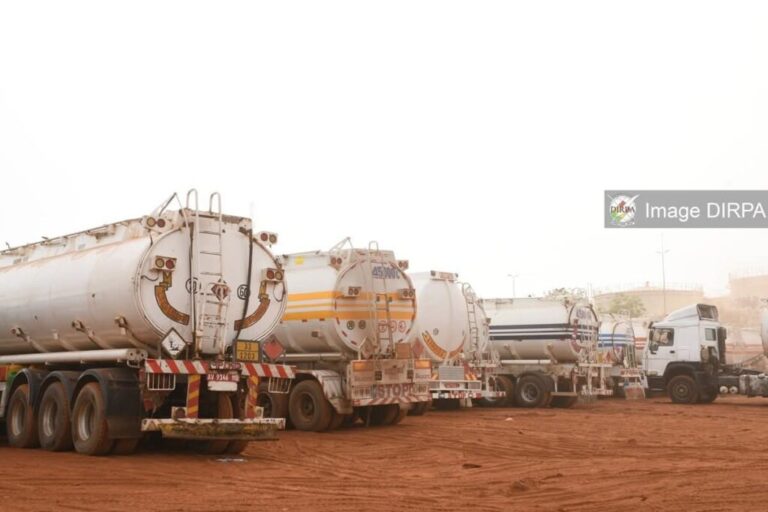
A total of 698 fuel tankers delivering 32.5 million litres of petroleum products arrived in Bamako between July 27 and August 2, 2026, according to details released during the 30th weekly fuel supply monitoring meeting.
Chaired by Minister of Industry and Trade Moussa Alassane Diallo at the Chamber of Commerce and Industry of Mali, the session reviewed the operational logistics of the convoy. The overall delivery comprised 32,501,400 litres, averaging approximately 46,564 litres per vehicle and a daily influx of 4.64 million litres. Gasoline and diesel made up the vast majority of the shipment, accounting for 594 tankers—85.1 percent of the total—alongside smaller distributions of Jet A1 aviation fuel, fuel oil, and butane gas.
Despite the substantial delivery, supply volumes to the capital experienced a decline compared to previous periods. The recorded 32.5 million litres represents a 12.2 percent drop from the 37 million litres transported by 807 tankers the preceding week, and a 20.5 percent decrease from mid-July figures. Officials noted a replenishment rate of 12 percent, explaining that pre-existing inventory in filling station storage tanks created bottlenecks that delayed the offloading of incoming tankers.
Regional distribution data remained sparse, showing only nine gasoline tankers dispatched to outer regions such as Ségou and Dioïla, leaving a full national supply assessment incomplete. Authorities emphasized that regular tracking across all localities remains crucial to pinpointing regional inventory shortages. Meanwhile, pump prices in Mali remain fixed at CFA875 per litre for gasoline and CFA940 per litre for diesel following hikes enacted in March. Government efforts continue to focus on convoy security, cost stabilization, and anti-fraud monitoring to ensure steady fuel availability for consumers.
MD/te/Sf/lb/abj/APA