



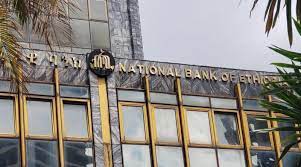
The government of Ethiopia has announced plans to remove the lending cap and allow commercial banks to expand credit supply in line with market demand, a senior official at the ministry of finance disclosed.
The policy shift, which is scheduled to take effect next month, help ease restrictions that has constrained lending for two years, state minister of finance Eyob Tekalign said Friday in a briefing.
“The release of such a large volume of credit must be accompanied by prudent monetary oversight to ensure that it does not overheat the market,” he said.
The National Bank of Ethiopia (NBE) first imposed the lending cap in August 2021 to combat high inflation caused by rapid credit expansion.
Initially, the restriction limited commercial banks to increasing their annual lending by only 14% of their previous year’s loan volume.
By the end of last year, this cap was slightly raised to 18 percent. However, businesses and financial institutions have long argued that the restriction severely constrained liquidity, limiting investment opportunities, and slowing economic growth.
Ethiopia has been battling double-digit inflation for years, with food prices and currency depreciation fueling household pressures.
Analysts warn that while additional liquidity could support investment and private-sector growth, it also risks stoking demand-side inflation unless carefully managed.
The Ministry of Finance said it is working in close coordination with the National Bank of Ethiopia (NBE) to ensure that the credit expansion is rolled out gradually, with targeted oversight of high-risk sectors.
Measures under consideration include stricter reserve requirements, phased liquidity injections, and closer monitoring of bank lending practices.
The easing of the credit ceiling is expected to benefit businesses struggling with financing constraints, particularly in manufacturing, construction, and agriculture—sectors seen as critical to Ethiopia’s growth strategy.
Economists suggest that if managed effectively, the reform could provide a much-needed stimulus for Ethiopia’s slowing economy, attracting private investment and improving confidence in the financial sector.
MG/abj/APA