





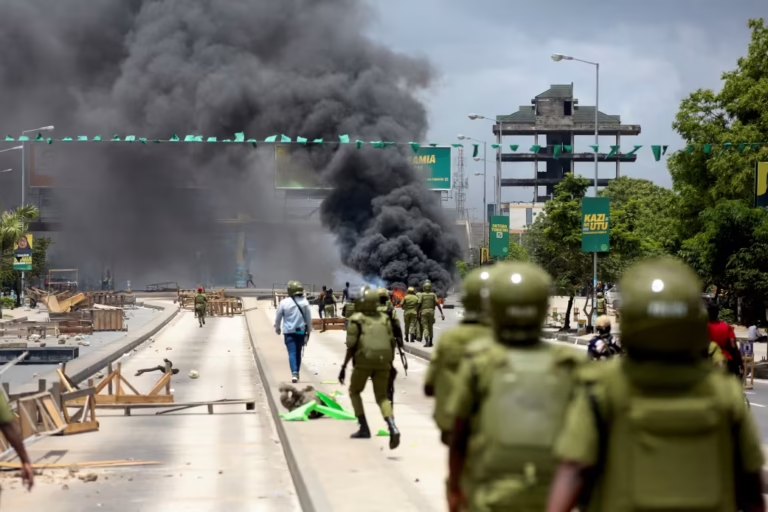
The European Parliament has urged the European Commission to immediately suspend direct financial support to Tanzanian authorities, citing widespread violence following the country’s disputed October 2025 elections and the arbitrary detention of opposition leader Tundu Lissu.
In a resolution adopted Thursday with 539 votes in favour and 27 abstentions, Members of the European Parliament (MEPs) condemned the excessive use of force by Tanzanian security forces against protesters, which left thousands dead or injured amid reports of mass graves.
MEPs also denounced curfews, internet shutdowns and restrictions on media imposed during the crackdown.
The resolution singled out the detention of Lissu, who was barred from contesting the elections and later charged with treason, a capital offence under Tanzanian law.
MEPs demanded his immediate and unconditional release, warning that his imprisonment under harsh conditions exemplifies the government’s heavy-handed response to dissent.
The resolution highlighted “Parliament’s demand to the commission to halt direct support to the Tanzanian authorities.”
It urged European Union assistance to Tanzania to prioritise civil society organisations, human rights defenders and journalists, and called on the commission “to consider sanctions against those responsible for violations.”
Tanzania’s October polls were sharply criticised by African Union and Southern African Development Community observers who cited irregularities and the exclusion of key opposition figures.
The EU was not invited to send an observation mission.
The aftermath saw mass arrests, abductions and disappearances of opposition leaders and activists, including reports of enforced disappearances such as that of Humphrey Polepole.
MEPs called for an African-led international commission of inquiry to investigate alleged killings, torture and disappearances, stressing the need for accountability.
They further pressed Tanzania to abolish the death penalty, commute existing sentences and engage in inclusive dialogue with opposition and civil society to pave the way for credible new elections.
JN/APA