



The Ethiopian embassy in Brussels criticised the European Union’s position on the Nile River as “problematic and deeply disappointing.”
The embassy’s condemnation came after the European Union Council and Egypt issued a joint communiqué what the embassy said “echoes Egypt’s colonial and monopolistic claims over the Nile River.”
The joint communiqué by the EU and Egypt said “We will collaborate on water-related issues at bilateral, regional, and international levels.
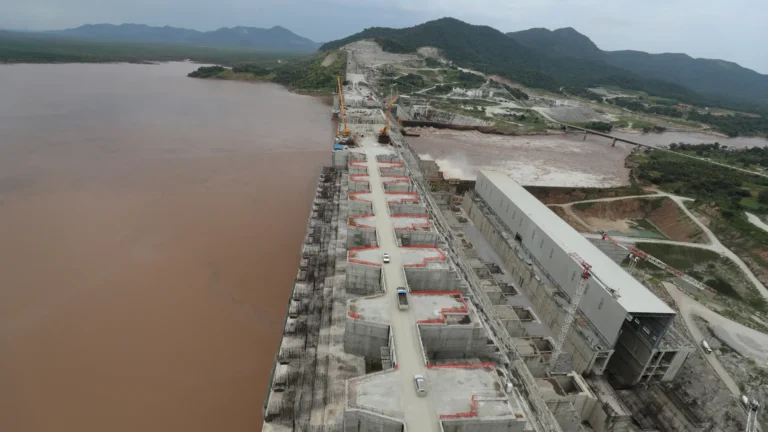
Recognising Egypt’s heavy reliance on the Nile River in a context of its water scarcity, the EU reiterated its support to Cairo’s resource security and the compliance with international law, including concerning the Ethiopian dam, the communiqué said.
The communiqué further said the EU said it strongly encourages transboundary cooperation among riparian countries based on the principles of prior notification, cooperation, and ‘do no harm’.
The embassy expressed regrets that “the EU decided to undermine Ethiopia in a bilateral platform with Egypt,” describing the joint statement as one that “propagates inaccurate, biased, and hostile positions against Ethiopia” and as being “contrary to the quality of the historic relations that exist between Ethiopia and Europe.”
“It is important to remember that the River Nile has eleven riparian countries,” the embassy noted, adding that the statement “negates the rights, aspirations and very existence of nearly half a billion people in these Sub-Saharan African countries,” the embassy said in a statement.
According to the statement, the EU’s stance disregards well-established principles of international water law, including equitable and reasonable utilization, a cornerstone of trans-boundary resource management.
The embassy said it was “deplorable” that the EU, a continent with extensive experience in shared water governance, adopted what it called a “distorted take on international law.”
The embassy further argued that the joint communiqué runs counter to key international instruments governing trans-boundary water cooperation, including the Nile River Basin Cooperative Framework Agreement (CFA), the UNECE Water Convention, and the UN Convention on the Law of the Non-navigational Uses of International Watercourses (1997).
MG/as/APA