





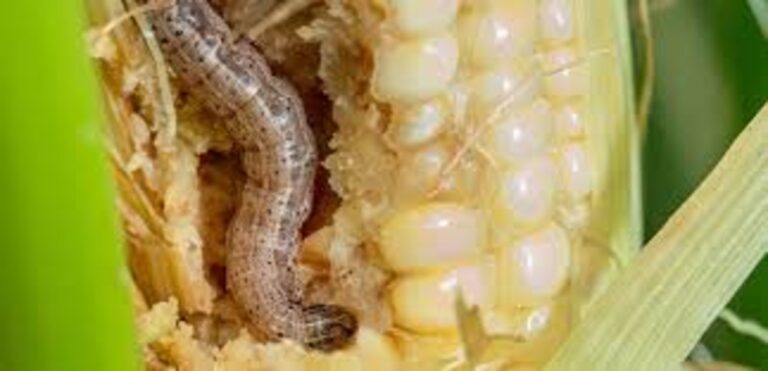
More than 15,800 farmers in Zambia’s Copperbelt Province are battling a fast‑spreading fall armyworm outbreak that has already ravaged an estimated 10,000 hectares of cropland, agricultural authorities confirmed this week.
The infestation, which has been escalating through the 2025/26 farming season, is affecting 175 of the province’s 247 agricultural camps, according to Copperbelt Senior Field Crops Officer Michael Mumbi.
“The Ministry of Agriculture has been combating the fall armyworm to ensure that crop yields are not affected,” Mumbi said.
He said the surge in reports is linked to the fact that most maize and other staple crops are currently at the vegetative stage – the period when they are most vulnerable to pest damage.
Fall armyworms, an invasive moth species native to the Americas, have become a recurring threat across southern Africa since their first major regional outbreak in 2016.
The pest is known for its rapid spread, ability to destroy entire fields within days and resistance to many conventional pesticides.
Seasonal outbreaks have since become common in Zambia, Malawi, Zimbabwe and South Africa, often coinciding with warm, wet conditions.
To contain the current surge, the Ministry of Agriculture has deployed a range of interventions, including training farmers and extension officers in Integrated Pest Management.
The province has also received 10,000 litres of pesticides for distribution across all 10 affected districts.
JN/APA