





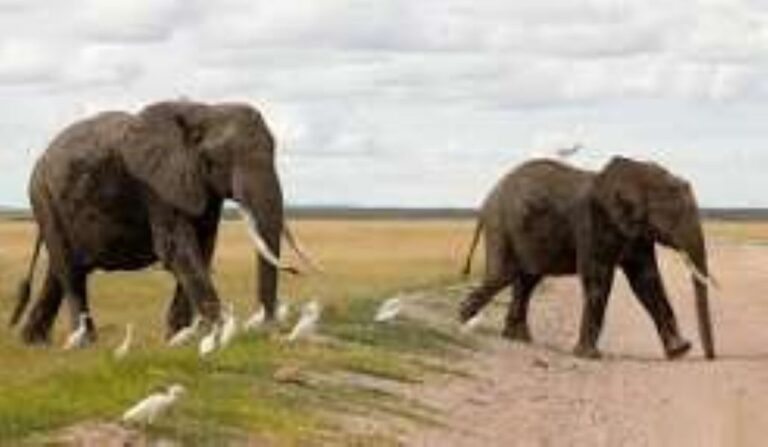
Fifteen elephants were found dead outside the Amboseli National Park in Kenya allegedly due to cyanide poisoning, according to the Kenya Wildlife Service (KWS).
KWS Director General Erustus Kanga said preliminary laboratory analysis detected traces of cyanide in samples taken from the elephants, but authorities have not established how the chemical entered the animals’ food chain.
“We don’t know how this happened,” Kanga said on Friday during World Rangers Day celebrations, announcing the formation of a multi-agency team to investigate the source of the poisoning.
According to KWS, ten of the elephants had been found with signs of paralysis and then died within two days. The other five elephants were already dead by the time they were discovered.
KWS has intensified surveillance across the Amboseli ecosystem as investigations continue and said the multi-agency team will determine how the cyanide entered the elephants’ food chain and recommend measures to prevent a similar incident.
Kanga said a team will be coordinated by the Chief Executive Officer of the Pest Control Products Board (PCPB) and will include agencies responsible for regulating pesticides and environmental protection.
Samples collected from the carcasses were submitted to the University of Nairobi, the Government Chemist and other specialised laboratories.
Tests by the Government Chemist were negative for the substances initially screened, with additional analysis for other possible toxins continuing.
According to KWS, the deaths occurred between June 24 and July 24 in the Amboseli ecosystem, including Amboseli National Park, Kimana Wildlife Sanctuary and Kuku Ranch.
KWS said 10 elephants initially developed similar symptoms, including partial paralysis that left them unable to stand before dying within one to two days.
Most of the affected animals were adult females and calves, with only one adult male among the fatalities.
Kanga said expanding farming activities and changing land use have increased interactions between wildlife and agricultural communities, making it important to strengthen measures that support coexistence between conservation and farming.
MG/as/APA