





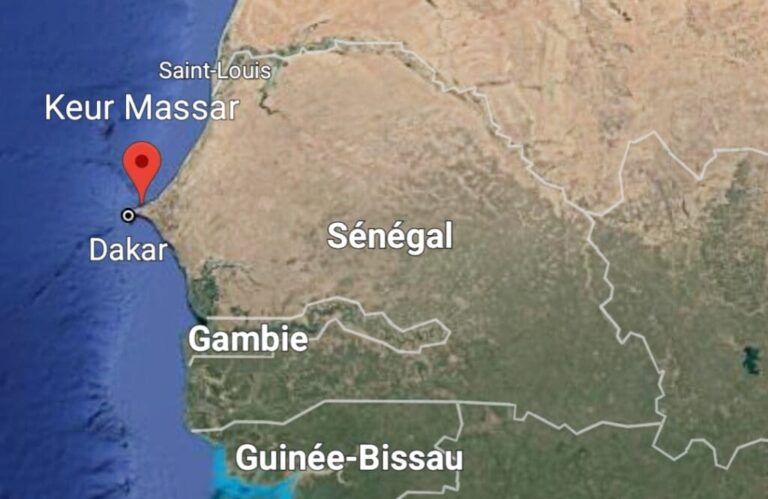
A two-day workshop aimed at adapting financial education textbooks for lower secondary school students opened on Tuesday in Dakar, APA has learnt.
The technical workshop, held in the Senegalese capital, brought together representatives from the Ministry of National Education, the Central Bank of West African States (BCEAO), and key stakeholders from the financial sector.
Organised by the Observatory for the Quality of Financial Services (OQSF) and Aflatoun International, the initiative forms part of Senegal’s National Financial Education Program (PNEF) 2025–2029, launched in July. The program seeks to equip the Senegalese population with essential financial knowledge and basic money management skills.
According to Waliou Yessoufou, Aflatoun International’s Regional Coordinator for West Africa, the workshop’s objective is to tailor the regional financial education textbooks—originally designed for all eight member states of the West African Economic and Monetary Union (WAEMU)—to Senegal’s specific context.
“The goal is to adapt the manual to better reflect Senegal’s realities and to include the country’s unique characteristics,” he explained.
Pape Amadou Diagne, Executive Secretary of the OQSF, noted that this session follows two previous meetings, held in 2023 and 2024, which validated the key themes considered most relevant for teaching financial literacy to young people.
He said the initiative aims to help students “acquire basic knowledge that will enable them to make sound financial decisions, choose appropriate financial products, save effectively, and understand key concepts such as tax citizenship.”
Representing the Ministry of National Education, the Dean of the General Inspectorate for Education and Training stressed the importance of this initiative in the context of the ongoing curriculum reform.
“Financial education will become a cornerstone of autonomy and inclusion for future citizens,” she said, emphasising the need to “build a bridge between the school system and the nation’s socio-economic realities.”
The effort falls under Axis 4 of the BCEAO’s Regional Financial Education Program (PREF), which seeks to provide students and learners across member states with essential financial literacy skills.
At the conclusion of the two-day workshop, participants are expected to produce recommendations and a reference document to be submitted to the Ministry of National Education.
The next phase will involve the concrete integration of these modules into the lower secondary curriculum, with the goal of shaping “financially included” citizens capable of making informed decisions.
ARD/ac/lb/as/APA