



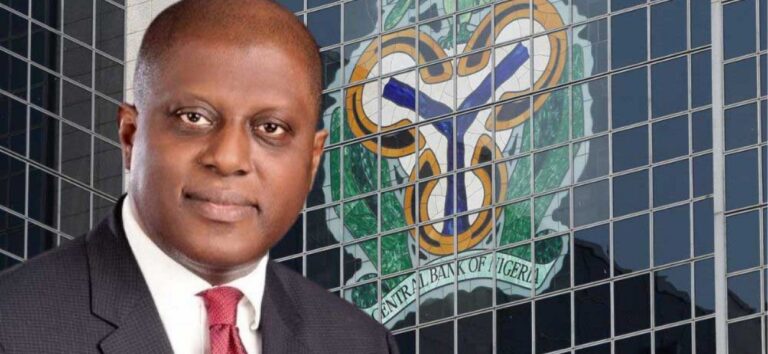
Nigeria’s National Bureau of Statistics (NBS) has reported that foreign capital inflows into the Nigerian banking sector rose sharply by 93.25 per cent year-on-year to $13.53bn in 2025, up from $7.00bn recorded in 2024, amid the ongoing recapitalisation drive by the Central Bank of Nigeria (CBN).
According to the capital importation report of the NBS, the banking sector remained the dominant destination for foreign capital, accounting for $13.53bn of the total $23.22bn recorded in 2025, representing 58.26 per cent of total inflows, up from 56.81 per cent in 2024.
It noted that the surge reflected heightened investor interest in Nigerian banks as they raise fresh capital to meet new regulatory thresholds introduced by the apex bank, with industry-wide recapitalisation activities driving large-scale inflows across all quarters of the year
.
The breakdown of the data showed that inflows into the banking sector were strong throughout 2025, beginning with $3.13bn in the first quarter, a 51.3 per cent increase from $2.07bn recorded in the corresponding period of 2024.
In the second quarter, inflows rose further to $3.41bn, a 203.2 per cent increase from $1.12bn in Q2 2024, while in the third quarter, banking inflows stood at $3.14bn, representing a sharp increase of 442.2 per cent from $579.48m recorded in Q3 2024, and the fourth quarter recorded $3.85bn, up by 19.2 per cent from $3.23bn in Q4 2024.
The analysis on Monday by Punch newspaper showed that the banking sector maintained a dominant share of total capital importation across all quarters in 2025, accounting for 55.44 per cent in Q1, rising to 66.56 per cent in Q2, moderating to 52.25 per cent in Q3, and increasing again to 59.75 per cent in Q4.
This compares with 61.24 per cent, 43.15 per cent, 46.26 per cent, and 63.46 per cent recorded in the corresponding quarters of 2024.
In contrast, capital inflows into shares declined year-on-year, falling 16.8 per cent to $271.42m in 2025 from $326.04m in 2024.
Overall, total capital importation into Nigeria grew by 88.5 per cent to $23.22bn in 2025, up from $12.32bn in 2024.
Quarterly data showed that total inflows rose across all periods, with Q1 increasing to $5.64bn from $3.38bn, Q2 rising to $5.12bn from $2.60bn, Q3 climbing to $6.01bn from $1.25bn, and Q4 reaching $6.44bn from $5.09bn.
The data indicate that the banking sector not only attracted the largest share of foreign capital but also served as the primary driver of the overall growth in capital importation, supported by regulatory reforms and improved investor confidence.
The report stated that the Governor of the Central Bank of Nigeria, Olayemi Cardoso, had earlier disclosed that 32 banks have already met the new capital requirements under the ongoing recapitalisation programme, ahead of the March 31, 2026, deadline.
Speaking in Abuja at the Monetary Policy Forum, Cardoso said, “The banking sector recapitalisation programme has recorded commendable progress, with 32 banks having already met the revised capital requirements.
“This achievement has significantly strengthened the resilience and capacity of the Nigerian banking system, positioning it to effectively mobilise long-term capital, support productive investment, and play its critical role in enabling the transition towards a $1.0tn economy.”
The CBN earlier disclosed that Nigerian banks attracted a total of N4.61tn in new capital under the recapitalisation programme.
The report stated that a statement from the apex bank noted that 27 per cent of this capital came from foreign investors, and the initiative has positioned banks to absorb shocks, support economic growth, and expand regionally.
GIK/APA