



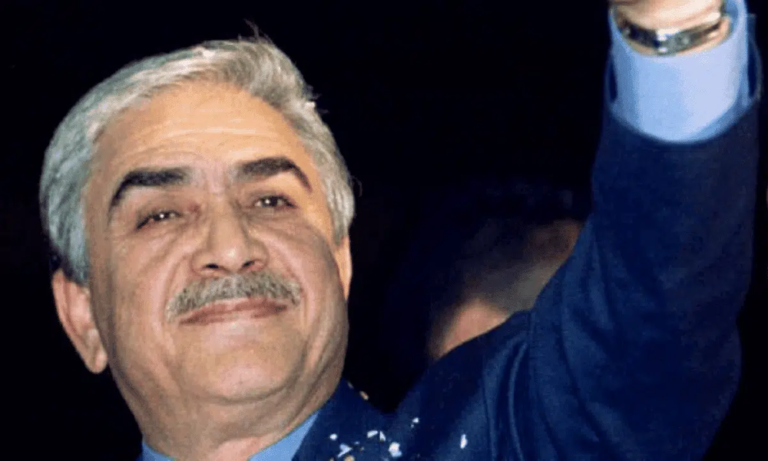
As Algeria observes a period of national mourning, the passing of former President Liamine Zeroual at the age of 84 has brought renewed focus to the complexities of the nation’s political evolution.
An official tribute was held at the People’s Palace in Algiers, attended by President Abdelmadjid Tebboune and high-ranking officials, to honor a leader who steered the country through the profound security crisis of the 1990s. Zeroual’s tenure is frequently defined by his rare 1998 decision to step down before the end of his term—a gesture cited as a significant, though exceptional, commitment to the principle of political transition in a landscape where power shifts are historically tightly controlled.
Zeroual’s political trajectory was uniquely shaped by his dual role as a military figure and an elected leader during a period of extreme civil violence. His presidency reflected the military institution’s central role in governance and serves as a historical mirror to Algeria’s ongoing challenges in stabilizing a fully civilian and institutionalized leadership model. In a final symbolic act, Zeroual will be buried in his hometown of Batna rather than the capital, a choice that reinforces his image as a leader who maintained a degree of distance from the traditional trappings of power.
Beyond the formal ceremonies, his passing marks the end of an era characterized by the continuous presence of former heads of state on national soil since independence. While this continuity has often been viewed as a sign of institutional stability, it also raises questions regarding the political system’s capacity for deep-rooted renewal. Ultimately, Zeroual remains a singular figure in Algerian history—an exception that highlights the persistent limits of a governance model where power transitions remain largely framed by tradition rather than open competition.
MK/AK/te/Sf/lb/abj/APA