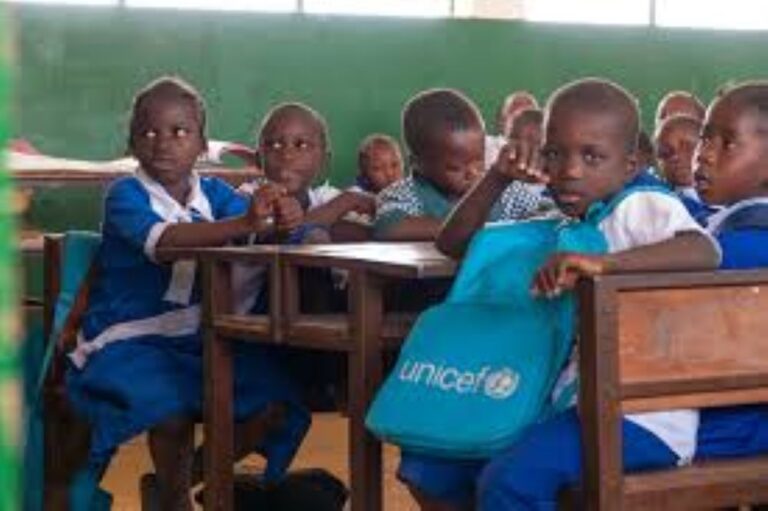
A new policy paper by the Gambian Ministry of Basic and Secondary Education (MoBSE) will see the introduction of seven local languages which would revolutionise the country’s early learning system.
This landmark education policy to approved by Gambian cabinet on Thursday, means that aside from English, the other medium of instruction in the early school system for beginners will include Jola, Mandinka, Manjak, Pulaar, Serer, Soninke, and Wolof.
The Gambia, a small Anglophone country of 2.7 million people, has been using English as the only medium of instruction in its school system from kidagarten to university.
In a statement the MoBSE described the so-called Learning in Language Policy (2025-2030) ”represents a bold step toward building a system that is more inclusive, equitable, and responsive to the needs of every learner”.
MoBSE said given language’s foundational essence, teaching in the first language of children will ensure learners begin their educational journey in a medium they understand best.
It referred to a global research suggesting that children respond to education most effectively when they are taught in a language they understand.
”By embedding these languages into classroom instruction, the LEP aims to strengthen literacy and numeracy, reduce dropout rates, and lay a solid foundation for lifelong learning” MoBSE said.
To ensure that no young stakeholder was left behind, the LEP will also formally recognise learners using sign language, guaranteeing accessibility for the deaf and hard-of-hearing attending school.
”By integrating national languages into curricula, developing culturally relevant teaching materials, and equipping teachers with multilingual pedagogical skills, the LEP will foster comprehension, confidence, and academic success” MoBSE indicated.
WN/as/APA