





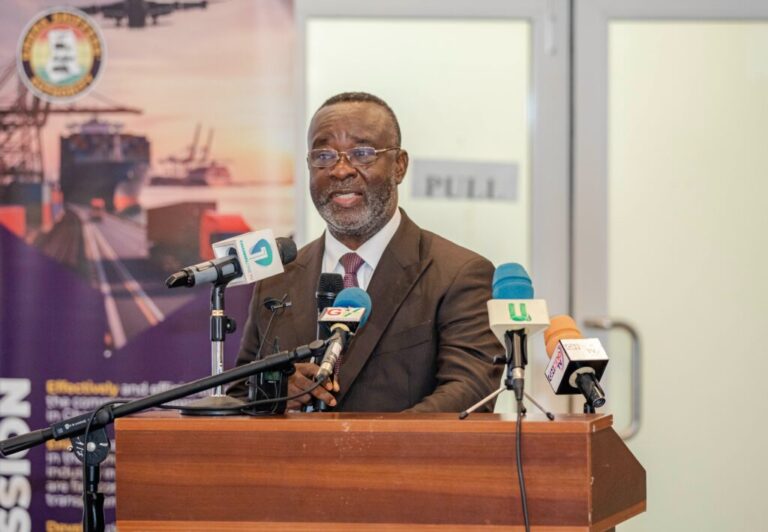
The Chief Executive Officer of the Ghana Shippers’ Authority (GSA), Professor Ransford Gyampo, says that the GSA is aligning its regulatory and infrastructure reforms with the government’s 24-Hour Economy policy and the African Continental Free Trade Area (AfCFTA) agenda to boost trade and logistics efficiency.
Speaking at the 32nd management workshop organised by the GSA Professor Gyampo, explained that the authority’s focus on trade facilitation, port efficiency and export promotion was intended to position Ghana as a competitive regional logistics hub.
He said that the ongoing reforms in port operations, digitalisation and infrastructure development were designed to support round-the-clock economic activity and expand intra-African trade.
“We deliberately aligned our interventions with the 24-Hour Economy and AfCFTA to reduce the cost of doing business and strengthen Ghana’s competitiveness in regional trade,” Prof. Gyampo said.
He said that the authority had intensified efforts to streamline port operations to reduce delays, inefficiencies and excessive charges that continued to burden shippers despite broader macroeconomic reforms.
According to him, the regulatory interventions are being deepened to ensure transparency in pricing by shipping lines and service providers, while strengthening compliance with approved tariffs.
He explained that the GSA’s engagement with port operators, shipping lines and terminal operators was already yielding results in improved turnaround times and better coordination among stakeholders.
The CEO stressed that efficient ports were central to the success of the 24-Hour Economy, as round-the-clock operations depended on predictable costs, faster cargo clearance and reliable logistics systems.
“If our ports are not efficient and competitive, the vision of a 24-hour economy will remain a slogan, which is why we are tackling both operational and cost-related bottlenecks head-on,” he said.
Prof. Gyampo said that the GSA had also strengthened regional and international partnerships to ensure Ghana fully benefited from the AfCFTA, the African regional trade and the emerging trade opportunities.
He said that collaboration with organisations such as the Union of African Shippers Councils, ECOWAS and other global trade bodies was helping to harmonise standards and protect the interests of Ghanaian shippers within the continental market.
Local media reports quoted the CEO as saying that the authority’s expanded presence at land borders and the airport would further support trade facilitation while ensuring the effective implementation of approved service charges.
He explained that these measures, alongside the protection and commercialisation of GSA assets, were part of a broader strategy to diversify revenue streams and ensure institutional sustainability.
“Our goal is to build a financially resilient authority that can effectively regulate, facilitate trade and support national development priorities without compromising on accountability,” Prof. Gyampo added.
GIK/APA