





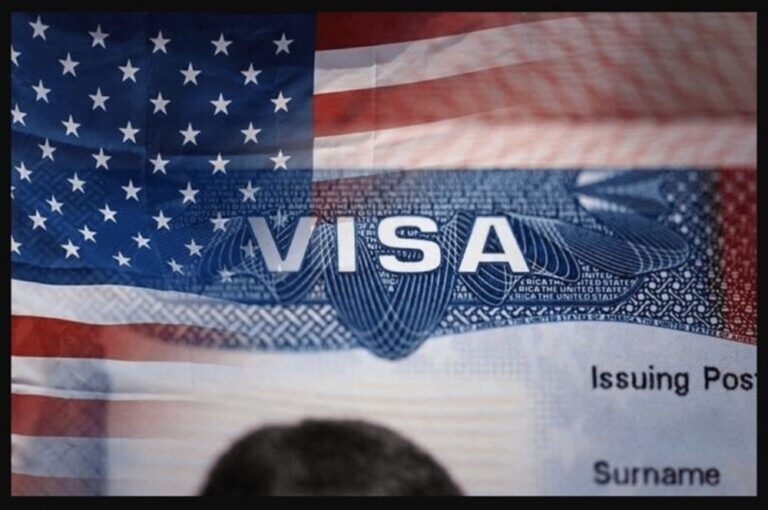
Starting January 1, 2026, Guinean nationals will pay a bond to obtain a short-stay U.S. visa, as Washington tightens its entry restrictions targeting Africa.
The West African country is now among the African countries whose citizens will have to pay a bond of up to $15,000 to obtain a visa which could guarantee only a short time in America.
The U.S. Embassy in Conakry announced Tuesday any Guinean citizen or national holding a
passport who applies for a B1, B2, or B1/B2 visa (tourism or business) will have to pay a bond of $5,000, $10,000, or $15,000, determined by the consular officer during the interview.
The measure does not affect holders of valid visas, but will apply to all new applications upon
their expiration.
The embassy warned that any advance payment is unnecessary and may not be refundable, and that the security deposit does not automatically guarantee visa issuance.
If the security deposit is paid and the applicant is deemed eligible, the visa will be valid for a single entry within three months, with a note acknowledging receipt of the deposit.
The length of stay will be determined by U.S. Customs and Border Protection officers, generally
limited to 30 days, and security deposits will be returned to those who have met all requirements.
This decision is part of a general tightening of U.S. entry restrictions, primarily targeting Africa. Of the 15 countries affected by partial restrictions, a majority are African, including Guinea, Angola, Benin, Ivory Coast, Gabon, Gambia, Malawi, Mauritania, Nigeria, Senegal, Tanzania, Zambia, and Zimbabwe.
The tightening of restrictions is accompanied by a massive recall of American diplomats, with nearly 30 overseas posts affected, including 13 in Africa, and is part of the “America First” doctrine, which aims to obtain the cooperation of foreign governments and strengthen control over entry into the United States.
The Supreme Court had upheld this type of measure, reiterating that it falls under presidential prerogatives.
AC/Sf/fss/as/APA