





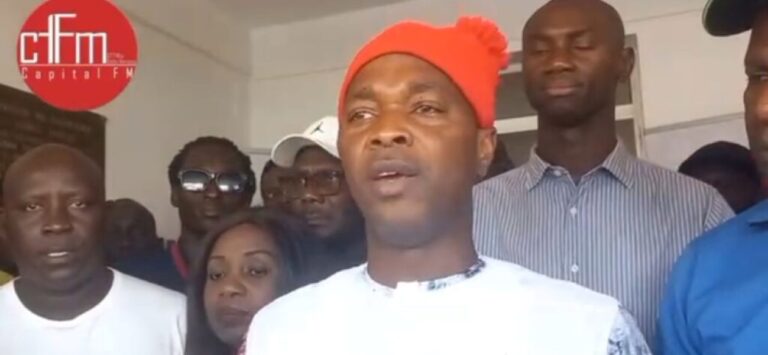
Independent candidate Fernando Dias da Costa, backed by the Social Renewal Party (PRS) and the Terra Ranka Coalition led by Domingos Simões Pereira, claimed on Monday that he won the 23 November presidential election outright in the first round.
This comes a day after the elections which the National Electoral Commission described as calm.
Dias da Costa, running as an independent with the support of the PRS and the Terra Ranka Coalition, asserted that the presidential contest was decided in the first round and dismissed any possibility of a runoff.
Strongly backed by Domingos Simões Pereira—leader of the PAIGC and main opponent of outgoing president Umaro Sissoco Embaló, who was barred from the race—Dias da Costa said results were favourable in most regions except Gabú. He also praised the strong voter turnout, which he described as a clear sign of the people’s desire for change, and stressed that the legal procedures overseen by the public prosecutor’s office had been duly respected.
The vote, which brought more than 960,000 registered citizens to the polls to elect both the president and members of the National Assembly, unfolded peacefully, according to Idriça Djaló, deputy executive secretary of the National Electoral Commission (CNE). Minor logistical challenges were quickly resolved, and the process proceeded in accordance with regulations under the supervision of polling staff, security forces, electoral officials and international observers.
Djaló also welcomed the “spirit of cordiality” shown by the candidates and highlighted the strong involvement of women and young people, describing it as evidence of citizens’ growing ownership of their political rights.
The CNE convened an emergency plenary session to address incidents involving voters in Portugal and France, authorising, among other measures, the use of the 2023 electronic register to enable the affected citizens to cast their ballots.
Provisional results are expected to be released by 27 November at the latest, although the law allows a seven-to ten-day window. Djaló urged voters, political parties and the media not to publish any figures before the official announcement, which remains the exclusive prerogative of the CNE.
The election pits incumbent president Umaro Sissoco Embaló, seeking a second term, against eleven challengers, including his predecessor José Mário Vaz, known as Jomav, and former prime minister Baciro Djá. Barred from running, PAIGC leader Domingos Simões Pereira threw his weight behind Fernando Dias da Costa.
AC/sf/lb/as/APA