





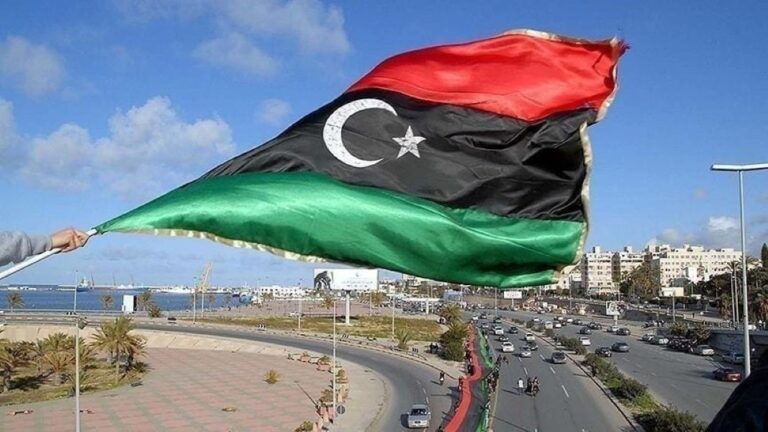
Libyan Prime Minister Abdulhamid Dbeibah has expressed support for the UN-led political “mini-dialogue,” while also calling for the acceleration of national elections aimed at ending the country’s institutional deadlock.
According to a statement released by the Libyan government on Monday, Dbeibah’s support for the UN “mini-dialogue” was expressed during a meeting with the UN Special Envoy for Libya, Hanna Tetteh, which focused on the latest political roadmap of the United Nations Support Mission in Libya (UNSMIL).
The meeting comes amid a prolonged institutional deadlock and fragmentation of the Libyan executive and legislative branches.
During their dialogue, the UN representative briefed the Libyan PM on ongoing efforts to bridge the gap between Libyan political actors. She presented the “mini-dialogue” as an initial step in a broader process focused on finalising electoral laws and reorganising the High National Electoral Commission, considered a key player in preparing for the elections.
Following these discussions, Abdulhamid Dbeibah reaffirmed his government’s support for “practical and feasible solutions” geared towards a civilian-led political transition.
The PM stressed the need to define a clear and applicable electoral framework, believing that holding elections quickly is a priority to end institutional divisions and restore political legitimacy based on the vote.
Domestically, the electoral issue remains at the heart of the disagreements between the country’s main rival institutions, given the lack of consensus on the constitutional basis for the elections.
Successive UN initiatives have thus far sought to establish a compromise between the various parties, without succeeding in setting a binding electoral timetable.
Furthermore, reports in some media outlets indicate a parallel, unofficial initiative involving proposals for political restructuring, including a new presidential council and a unified government, supposedly being discussed in diplomatic circles.
However, these developments have not been confirmed by the United Nations or the relevant Libyan authorities and remain, at this stage, merely political speculation circulating in the media.
MK/AK/Sf/fss/as/APA