





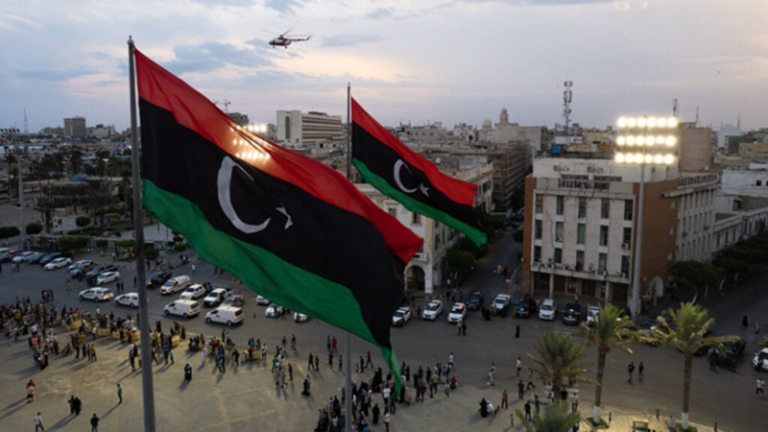
The Souq Al-Juma movement has announced the reopening of public institutions closed since Friday, bringing an end to its civil disobedience campaign against the Government of National Unity (GNU) in response to public hardship caused by the blockades.
In an early Sunday statement, the group cited numerous appeals from residents suffering from prolonged service disruptions as the primary motivation for lifting the shutdowns, which were originally launched to demand better living conditions and reliable electricity.
The protest was heavily catalyzed by a severe power crisis across several regions in recent days, an urgent issue that the group stated has since been addressed, partially justifying the suspension of demonstrations. However, the movement emphasized that lifting blockades does not signify abandoning its core goals, reiterating that the mobilization sent a clear message regarding citizens’ rights to a dignified life, functional public services, and government accountability. The statement affirmed that the group acted on behalf of the public and would not contribute to worsening local hardship.
Additionally, the movement dismissed reports alleging it had blockaded the residence of Prime Minister Abdul Hamid Dbeibah, clarifying that circulated footage actually depicted the headquarters of the Libya Africa Investment Portfolio. The mobilization occurs alongside broader power struggles in Tripoli involving armed factions, with the Souq Al-Juma movement linked to the Special Deterrence Force (RADAA). Observers note the campaign’s conclusion may tie into ongoing negotiations regarding the potential redeployment of RADAA forces to key sites following 2025 clashes with government units.
MK/AK/Sf/lb/abj/APA