





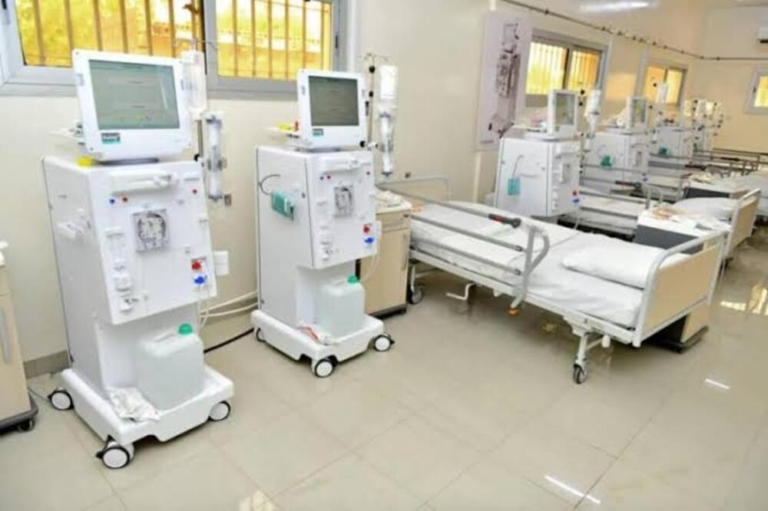
The Malian Society of Nephrology (SONEMA) has warned the health minister about the saturation of dialysis centres and the difficulties faced by hundreds of patients with chronic kidney disease in accessing treatment.
The organisation called for stronger prevention measures, the adoption of national standards and faster progress on the kidney transplantation programme.
According to data presented by Malian health authorities, 574 people were awaiting a place for haemodialysis in March 2025, while 815 patients were already receiving treatment in specialised centres across the country.
During a meeting with the health minister, SONEMA presented a concerning assessment of kidney disease management in Mali. Specialists highlighted limited treatment capacity, difficulties in patient follow-up, gaps in epidemiological data collection and technical constraints affecting the operation of dialysis units.
The Point G University Hospital, Mali’s main nephrology referral centre, is bearing the brunt of the pressure. The facility had 435 patients waiting for haemodialysis sessions and only 30 operational machines out of a total fleet of 42 generators.
Other specialised facilities are also facing significant waiting lists, including 60 patients at the Commune IV Referral Health Centre in Bamako, 44 at the Commune V facility and 35 at the Military Medical and Surgical Centre.
A disease affecting a young population
Haemodialysis is a life-sustaining treatment for people whose kidneys can no longer properly remove waste products and excess fluid from the body. The treatment generally requires three sessions per week and depends on a continuous supply of dialysis machines, filters, medicines, medical supplies and water treatment systems, as well as highly qualified medical personnel.
For patients living outside Bamako, the concentration of dialysis infrastructure in the capital results in long journeys, high transport costs and frequent interruptions to professional activities.
SONEMA data also shows that more than 60% of people suffering from chronic kidney disease in Mali are between 20 and 40 years old, highlighting the socio-economic impact of the condition on the country’s working-age population.
Studies conducted at Point G University Hospital confirm this trend. One study involving 150 patients undergoing chronic haemodialysis found an average patient age of 40.45 years. It also showed that 60% of patients had low incomes and that the mortality rate recorded during follow-up reached 37.3%.
Another study involving 62 patients admitted for emergency first-time dialysis reported an average age of 36.82 years and a fatality rate of 69.35%. Patients were generally treated at an advanced stage of the disease, characterised by severe anaemia, a significant reduction in urine output, vomiting and a major accumulation of toxins in the blood.
Accelerating prevention and transplantation
In response to the situation, SONEMA has recommended the development of national guidelines defining standards for the establishment and operation of dialysis centres. The framework would set requirements for equipment, water treatment, machine maintenance, infection prevention, staff qualifications and patient monitoring.
Nephrologists also want to expand peritoneal dialysis, a technique that uses the peritoneal membrane as a natural filter and is particularly suitable in certain cases of acute kidney failure among both children and adults.
Prevention is another priority area. Specialists stress that high blood pressure and diabetes remain the leading causes of chronic kidney disease. Early screening through blood pressure checks, urine protein testing and blood creatinine measurements can help detect kidney damage at an early stage and slow disease progression.
SONEMA has also called for the acceleration of Mali’s kidney transplantation programme. Although the Point G University Hospital board approved an initial transplant project in February 2005 and Mali adopted legislation regulating organ donation and transplantation in June 2009, the programme has yet to become operational.
Preparatory studies had already identified key requirements, including the training of multidisciplinary teams, the acquisition of specialised equipment, the development of compatibility testing facilities and the long-term availability of immunosuppressive treatments. Several Malian patients have already undergone preparation at Point G University Hospital before receiving transplants abroad and returning for follow-up care.
Following the meeting, the health minister stressed the importance of strengthening prevention, public awareness, patient monitoring and health data collection. She also called for improved coordination between hospitals, specialists, patient associations and other stakeholders to ensure lasting improvements in kidney disease management in Mali.
MD/te/Sf/lb/as/APA